Introduction to Finding Off Market Real Estate Deals
Every investor eventually realizes something uncomfortable. The people who consistently profit in this business are the ones who already know how to find off market real estate deals long before those properties ever reach the MLS. By the time a listing goes public, it has usually been passed around quietly, evaluated by insiders, and picked apart by investors who had early access. What the public sees online is rarely the true opportunity.
The real advantage comes from spotting a potential deal before anyone else even knows it exists. Early visibility leads to less competition, more negotiation flexibility, and a direct path to the property owner. Investors who stay ahead spend their time reading distress signals, checking ownership records, and contacting sellers privately. They rarely talk about these methods because sharing them only increases competition.
This post breaks down the exact framework used by investors who already know how to find off market real estate deals at scale. You will see how they identify distressed properties both in person and online, how they track down owners in minutes, and how they build a routine that produces steady deal flow in any market. By the end, you will understand why off market strategies outperform the traditional listing route and how you can start finding these opportunities yourself.
What Off Market Real Estate Really Means for Investors

Off market simply refers to a property that is available to buy but not advertised publicly. It does not appear on real estate sites, it is not listed on the MLS, and only a limited number of people know it might be for sale. Understanding this category is the foundation of learning how to find off market real estate deals.
For a broad overview of off market homes, this guide explains how these deals work.
This is very different from pre market situations where a property is preparing for a traditional listing. It also differs from pocket listings, where agents quietly shop a property to a small list of buyers before going public. Expired listings do not count either because those homes already failed to sell through public exposure.
For a deeper definition of pocket listings, see this resource.
Sellers choose the off market path for privacy, speed, convenience, or because they are still unsure about selling until someone reaches out directly. Investors chase these properties because competition is lower, conversations are faster, and negotiations happen without the pressure of multiple buyers in the room.
Off market deals solve problems for both sides. Sellers get control and certainty. Investors get equity and cleaner terms. This dynamic is why everyone who wants long term success eventually learns how to find off market real estate deals instead of waiting for public listings.
The Core Framework Investors Use to Find Off Market Real Estate Deals

Finding off market opportunities is not based on luck. Investors who already know how to find off market real estate deals use the same underlying framework built around four major advantages.
Visibility Advantage
They look for distress signals long before a property is ever considered for public listing. Yard neglect, tax issues, absentee ownership, and online imagery all give clues that an opportunity is developing. This early visibility is the first step in consistently finding off market real estate deals.
Speed Advantage
Once they identify a potential opportunity, they act immediately. They reach out directly without waiting for agent schedules or open houses. Speed makes them the first real option the seller considers.
Negotiation Advantage
A private conversation removes the competition and noise that pushes prices higher in a public sale. Sellers focus on solving their situation rather than managing multiple offers at once. This creates room for better terms, flexible arrangements, and creative solutions.
Direct to Seller Advantage
Contacting the owner directly eliminates communication gaps and allows both sides to design a deal that works for their goals. Many investors say this single advantage changes everything about how they find off market real estate deals.
When these advantages stack together, they create profit margins that are rarely possible on publicly listed homes. Early visibility, faster action, cleaner negotiation, and direct communication lead to opportunities the general public never sees.
Old School vs New School Methods for Finding Off Market Property Leads

Learning how to find off market real estate deals used to look very different than it does today. Years ago, investors relied almost entirely on in person observation and word of mouth. They drove neighborhoods for hours, talked to mail carriers, checked legal notices at the courthouse, and monitored local newspapers for foreclosure updates. Those methods produced deals, but they required a huge amount of time and effort.
Some of these approaches still work today. Driving for dollars will always reveal physical distress that no database can match. Networking with contractors, property managers, and local business owners still uncovers leads before the general public sees them. Even courthouse records are still useful for spotting probate cases, delinquent taxes, and code violations. These traditional tactics remain valuable, especially when combined with digital tools.
What has changed during the past decade is the rise of data. Investors who know how to find off market real estate deals today often start with digital indicators instead of physical ones. Satellite imagery, skip tracing platforms, county data portals, absentee owner lists, pre foreclosure feeds, and free online tools make it possible to identify opportunities without ever leaving your house. Virtual driving for dollars, automated alerts, and integrated lead tracking systems have reshaped the process entirely.
Despite this evolution, most beginners never learn the newer methods. Many investors do not share the tools they use because more competition would shrink their advantage. Others avoid modern strategies because they seem complicated or require a small learning curve. The result is a gap in the industry. Old school investors cling to outdated habits, while modern investors quietly use digital systems to find off market real estate deals faster and more efficiently than ever before.
Method One

Driving for Dollars to Find Distressed and Off Market Properties
Driving for dollars is one of the oldest and simplest ways investors learn how to find off market real estate deals. The idea is straightforward. You drive through targeted neighborhoods and look for properties showing signs of neglect, distress, or vacancy. These visual clues tell you the owner may be open to selling even if the property is not publicly listed.
Physical distress remains the most reliable indicator of a hidden opportunity. Online data can help, but nothing matches what you see with your own eyes. When a home is clearly not being maintained, it usually means the owner is dealing with financial pressure, vacancy, inheritance, or a property they simply no longer care about. These situations often lead to private off market sales.
The signs to look for are easy to spot once you know what matters. Overgrown grass, boarded windows, peeling paint, damaged roofs, stuffed mailboxes, broken gutters, or tarps on the house are all signals that something is going on behind the scenes. Even small details like old flyers on the door or trash bins permanently left out front can hint that the owner may not be living there.
Driving for dollars works best in older neighborhoods, areas with long term owners, or places experiencing slow turnover. It is especially effective during economic downturns, after storms, or in cities where absentee ownership is high. When paired with skip tracing or a direct outreach process, it becomes one of the fastest and cheapest ways to find motivated sellers.
To go deeper on this strategy, you can read the full guide on Driving For Dollars.
Method Two

Virtual Driving for Dollars to Discover Hidden Real Estate Deals
Virtual driving for dollars is a newer approach that grew as more investors began looking for ways to scale their search without spending hours behind the wheel. It became popular when people realized they could learn how to find off market real estate deals simply by scanning neighborhoods through online mapping tools instead of physically driving them.
This method relies on a set of digital tools that experienced investors quietly use to build massive lead lists from home. Google Maps, Apple Maps, Bing Streetside, and satellite view platforms reveal the same exterior conditions you would notice in person. Some investors also use property data platforms that let them compare multiple years of imagery to track changes over time.
The key is knowing what to look for on satellite and street view. Roof tarps, damaged shingles, boarded windows, faded paint, broken fencing, neglected yards, and missing vehicles are all visual signs that a property may be distressed or vacant. Even patterns like repeated photos of the same vehicle or no vehicles at all can provide clues about occupancy.
Current vacancy rates are available in the U.S. Census Bureau’s report.
Once you spot a potential property, the next step is verifying ownership. Most counties have public records where you can confirm the owner’s name, mailing address, tax status, and whether the owner actually lives on site. When you combine this information with skip tracing or direct mail, you end up with a powerful strategy for finding motivated sellers quietly and consistently.
To dig deeper into this method, check out the full guide on Virtual Driving for Dollars.
Method Three

Skip Tracing for Direct to Seller Real Estate Leads
Skip tracing is one of the most powerful steps in learning how to find off market real estate deals because it solves the biggest problem in the process. You can spot a distressed property, but none of it matters if you cannot reach the owner. Skip tracing fills that gap by helping you uncover a property owner’s phone number, email address, or updated mailing address in minutes.
In real estate, skip tracing simply means using public records, databases, and online tools to locate accurate contact information for a property owner. Professionals rely on it because owners of distressed or vacant properties often do not live at the physical address. Many inherited properties, rentals, and abandoned homes have outdated records. Skip tracing cuts through that confusion and gives you a direct way to start a conversation.
A general explanation of skip tracing can be found in this article.
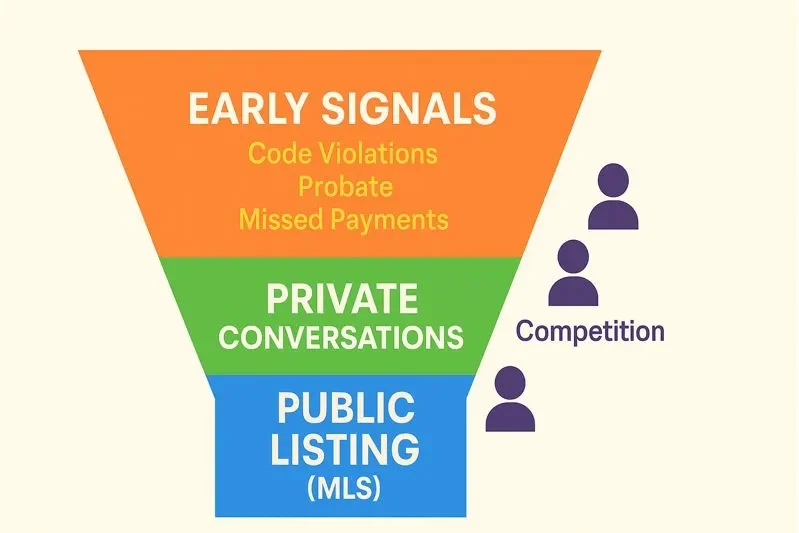
This method fits perfectly into the larger off market funnel. Driving for dollars and virtual driving for dollars identify the property. Skip tracing locates the owner. Outreach turns that lead into a potential deal. Without skip tracing, most of the best opportunities never move past the “I saw a distressed house” stage. With it, you gain direct access to sellers that the general public cannot reach.
Because skip tracing gives you sensitive information, there are ethical guidelines worth following. Contact the owner respectfully. Do not harass, spam, or pressure them. Offer value, listen to their situation, and be transparent about who you are and why you reached out. The goal is to create solutions, not push someone into a rushed decision.
To explore skip tracing in more detail check out the post on What Is Skip Tracing in Real Estate
Method Four

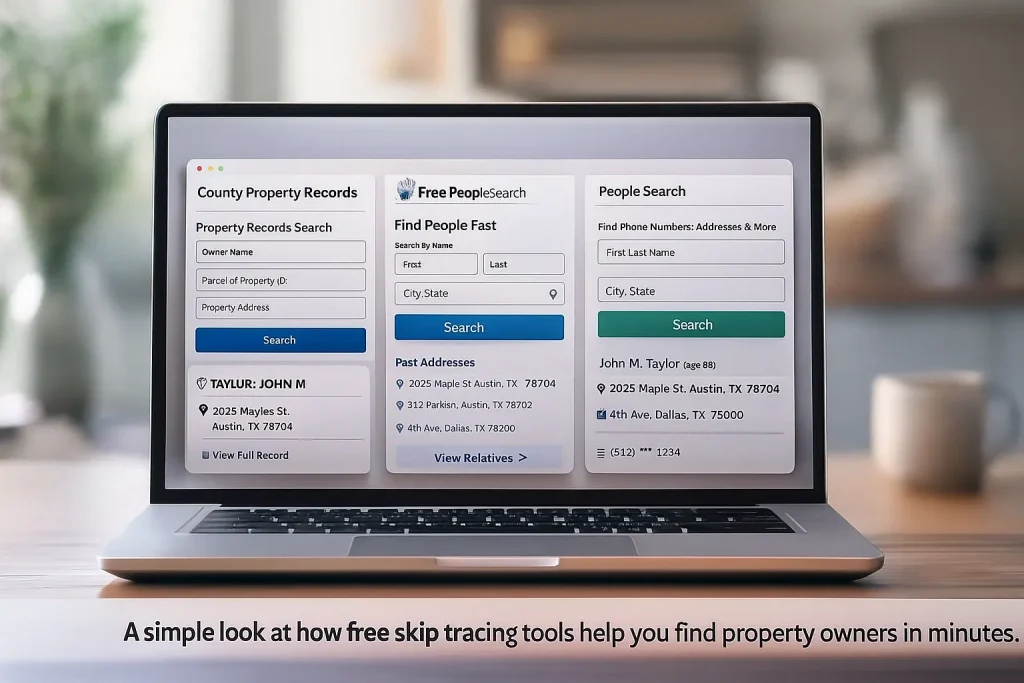
Free Skip Tracing Tools for Locating Off Market Sellers
Free skip tracing is one of the most underrated ways to learn how to find off market real estate deals without spending money. Most new investors assume they need expensive software to contact property owners, but there are many free tools that provide enough information to keep your lead flow moving.
Several little known resources can help you track down an owner’s updated address or phone number. County property records often list full mailing addresses. Local tax assessor websites show ownership history and where tax bills are sent. Social media profiles, voter registration lookups, and even basic Google searches can reveal current contact details. While these tools take more time than paid databases, they work surprisingly well when combined.
Free skip tracing works best when you have a small list of properties or when the owner’s information is easy to find through public data. If you only need a few solid leads per week, these no cost tools will get the job done. The key is staying organized and verifying that the information you find is correct before making outreach attempts.
Paid skip tracing becomes necessary when you scale your lead generation. Large lists, multiple zip codes, and high volume outreach require faster, more accurate data. Paid tools also reduce the amount of manual searching you must do. For newer investors starting out, the free approach is usually enough. As you grow, paid options speed up the entire process.
When you are ready to go deeper into these methods and learn exactly which free platforms investors rely on, you can explore the full guide on Free Skip Tracing Tools.
Method Five

High Intent Real Estate Leads for Off Market Deal Finding
One of the biggest breakthroughs in learning how to find off market real estate deals is understanding the difference between a list and a real lead. Most beginners think buying a list of thousands of names means they now have leads. In reality, they only have data. A list is nothing more than a collection of property owners. A lead is someone who has shown signs of motivation, distress, or circumstance that makes a sale possible.
Beginners often buy the same generic lists that rarely convert. Absentee owners with no distress, equity lists with no urgency, and giant bulk lists full of outdated information create a ton of busywork but almost no actual conversations. These lists look impressive on paper but lead to frustration when owners ignore outreach or have zero interest in selling.
Experienced investors focus on narrower lists with a specific purpose. Pre foreclosure, tax delinquent, code violation, probate, tired landlord, and vacant property lists consistently produce higher intent leads. These owners have a reason to at least consider an off market offer, which dramatically improves your chances of having a meaningful conversation.
For clarity on foreclosure timelines, the CFPB provides a helpful overview.
Each type of lead aligns with a different strategy. Tired landlords fit long term rental or creative financing approaches. Probate and inherited properties often work well for cash offers or quick closings. Tax delinquent or code violation lists commonly lead to discounted opportunities. When you match the strategy to the motivation behind the list, your results improve fast.
For a full breakdown of the lead types investors actually use and how to build them into your deal pipeline, you can reference the detailed guide on how to find Real Estate Investor Leads.
Method Six

Early Detection Strategies for Off Market Real Estate Opportunities
Learning how to find off market real estate deals consistently comes down to understanding the modern discovery funnel. Years ago, investors relied almost entirely on local observations and word of mouth. Today, the strongest results come from combining on the ground data with the digital information that homeowners unknowingly leave behind. When you merge the two, you see opportunities long before they become public.
The modern funnel starts with early indicators. Distress signals, absentee ownership, sudden changes in occupancy, and mismatched mailing addresses all point toward potential motivation. Meanwhile, driving for dollars reveals physical signs that no database can capture. When you collect both types of data, you create a list of properties that are far more likely to convert.
Turning this into a system is where most investors fall short. Instead of searching randomly or hoping for luck, the goal is to build a repeatable workflow. You identify neighborhoods, check ownership details, track distress, and send outreach in a structured sequence. A simple spreadsheet or lead tracking tool is enough to manage dozens of opportunities at different stages of the funnel.
Daily and weekly routines keep everything moving. Daily tasks might include checking new distress indicators, updating property notes, or making outreach attempts. Weekly tasks could involve reviewing your full pipeline, driving new areas, refreshing ownership records, or verifying which sellers responded. When this becomes a habit, momentum builds fast.
For a deeper walk through of how to combine these steps and consistently spot opportunities ahead of your competition, you can reference the expanded guide here on How To Find Off Market Properties.
Method Seven

Timing Strategies to Spot Real Estate Deals Before the Market
Knowing how to find off market real estate deals is only part of the equation. The timing of when you discover them plays an equally important role. Top investors understand that every market has windows where certain types of opportunities appear before anyone else notices. When you time your search correctly, you see motivated sellers weeks before the rest of the market catches on.
Timing windows show up in predictable ways. Early in the year, many owners reassess their finances and consider selling long before agents get involved. During tax season, delinquent properties become visible through public records. In the summer, tired landlords deal with vacancies and surprise repairs. Late fall often exposes owners who want to offload a property before year end. Investors who understand these patterns build their outreach around them.
Different off market deal sources also produce at different points in the market cycle. Probate leads tend to remain steady in any economy. Pre foreclosure and tax delinquent lists grow when rates rise or money tightens. Distressed absentee owners spike during rental slowdowns. By understanding the cycle, you can choose the right lists at the right time and avoid wasting effort on leads with low motivation.
In almost every situation, the first conversation wins. When a seller is dealing with stress, confusion, or uncertainty, the first investor who reaches out and offers solutions builds trust immediately. That early contact often closes the door on competitors before they even know the property is available.
For a deeper look at timing strategies and the sources that produce the earliest opportunities, you can reference the guide on How To Find Real Estate Deals.
Why Investors Hide Their Off Market Real Estate Deal Strategies

There is a reason most investors never openly explain how to find off market real estate deals, even though these methods are not exactly secret. The real estate industry has always operated on a scarcity mindset. People believe that if someone else learns the tactics that produce the best deals, their own opportunities will shrink. Because of that, most of the real strategies get shared quietly, privately, or only inside small circles.
Off market knowledge is heavily guarded because it gives investors an advantage that cannot be matched on the MLS. Knowing how to spot distress, how to time your outreach, and how to locate the owner before anyone else provides a level of control most buyers never experience. Investors who understand these systems do not want to compete with a wave of other people using the exact same techniques.
Even experienced investors publicly downplay these methods. They will joke about getting lucky, or they will attribute their success to connections, or they will give vague comments about “keeping an eye on the market.” Very few will say they spent years perfecting their workflow for identifying distressed properties, tracking owners, and contacting them before anything becomes public.
The interesting part is that these methods keep working even though they are widely discussed in theory. Most people never take action, never build a system, and never work consistently enough to see the results. The gap between someone who knows the strategy and someone who executes it daily is massive. That is why off market deal finding remains one of the most reliable advantages in real estate, no matter how many people claim to understand it.
How To Build a Repeatable Off Market Real Estate Deal System

Once you understand how to find off market real estate deals, the next step is building a simple system you can repeat every week. Most investors struggle not because the methods are complicated, but because they never create a routine that keeps leads moving steadily through the pipeline. A good system does not rely on motivation or luck. It relies on rhythm.
A weekly routine can be surprisingly simple. At the start of each week, you identify the neighborhoods or zip codes you want to focus on. You scan for new distress indicators, check for recent ownership changes, and add any promising addresses to your tracking sheet. A few days later, you verify ownership, skip trace the owners, and prepare your outreach. By the end of the week, you send your calls, texts, or mail. The routine repeats the following week with new properties and follow ups to last week’s leads.
The goal is to build a repeatable pipeline. New properties enter the funnel every week, owners get contacted consistently, and conversations naturally start forming. Even if only a small percentage respond, the compounding effect of weekly action creates momentum. Investors who master how to find off market real estate deals never rely on random searching. They rely on systems that keep opportunities flowing.
A simple spreadsheet is enough to track your early leads. As you start managing dozens of properties, lead tracking tools help you stay organized. CRMs built for investors allow you to tag properties, record conversations, schedule follow ups, and see exactly where each lead sits in the pipeline. The better your tracking, the easier it becomes to spot patterns and improve your process.
Reinvesting is the point where your system starts growing. Once your first few deals close, a portion of the profit should go toward better tools, paid skip tracing, or hiring someone to help with research. Reinvestment increases your speed and accuracy, which directly increases your deal flow.
Scaling happens when your system is consistently producing leads and you can handle more volume without losing quality. This might mean targeting more zip codes, increasing outreach frequency, or outsourcing the parts of the process that take the most time. The goal is to scale slowly but steadily, always protecting the quality of your conversations with sellers.
Common Mistakes Beginners Make When Finding Off Market Deals

Most new investors understand the basic idea of how to find off market real estate deals, but they struggle to turn that knowledge into consistent results. The problem usually isn’t the method. It’s the mistakes that slow progress, waste time, or stop momentum before it builds.
A common mistake is buying lists without a strategy. Beginners load up on absentee owner lists, equity lists, or bulk data with no plan for filtering or prioritizing them. They end up with thousands of names but no clear sense of which owners are actually worth contacting. Without a strategy, a list becomes nothing more than a stack of spreadsheets.
Another mistake is contacting sellers only once. Many new investors assume that if someone doesn’t respond the first time, the lead is dead. In reality, most off market deals happen on the second, third, or even fifth attempt. Timing, stress levels, and life circumstances all change. Consistent follow up is what turns cold owners into real conversations.
Over relying on one method is another trap. Some investors only use driving for dollars. Others only use skip tracing or only chase pre foreclosure lists. Each method can work, but no single approach produces enough volume on its own. Successful investors blend physical distress, digital data, timing windows, and structured outreach into one unified system.
Ignoring follow up is one of the fastest ways to lose deals. Sellers dealing with stress or uncertainty need time. A single missed call or unanswered text does not mean they aren’t interested. Most deals come from follow up, not first contact.
Many beginners also underestimate the difficulty of comping off market deals. These properties don’t have fresh MLS photos or recent listing data. They require deeper research, adjustments for condition, and a clear understanding of repair costs. Incorrect comps can lead to bad offers or missed opportunities.
The final mistake is quitting before momentum kicks in. Off market deal finding rewards consistency, not instant results. The first few weeks feel slow. The breakthroughs happen later, once your pipeline fills and conversations begin rolling in. Most investors fail not because they chose the wrong tactic, but because they stopped right before the process started working.
Final Thoughts on Mastering Off Market Real Estate Deal Finding

The off market approach continues to outperform the MLS for one simple reason. Public listings create competition. Off market opportunities create conversations. When you understand how to find off market real estate deals, you step into situations where sellers are open, timing works in your favor, and negotiations unfold without the pressure of multiple buyers driving prices up.
This advantage compounds over time. Consistency turns scattered effort into a predictable flow of opportunities. Every week you add new properties, reach new owners, and build more conversations. Some turn into appointments. Some turn into relationships. And a percentage of them turn into deals. The more weeks you stack, the more your system produces. Momentum does the heavy lifting.
If you want to go deeper into any of the individual methods or tools mentioned in this guide, the connected sub posts will walk you through each step in detail. Each one expands on the specific strategies investors use to spot distressed properties, reach owners quickly, and turn private conversations into profitable deals. Explore those guides when you are ready to take the next step in mastering off market deal finding.