
Introduction
Everyone keeps talking about low inventory right now. You hear it from agents, investors, and pretty much anyone trying to buy a home. The MLS feels stale. Prices sit higher than they should. Every decent listing gets swarmed with offers in the first twenty four hours. It is frustrating when you want to grow but the entire market feels picked over. So when you ask what is skip tracing in real estate, this is the real reason people start looking into it. And if you want the full breakdown of how investors consistently find hidden deals in tight markets, you can dive deeper into the off market deal method which explains the full process behind reaching sellers no one else can find.
Finding owners who are not actively selling has become the edge that separates the hobby investor from the one who keeps landing deals. The best opportunities stay hidden. They never hit the MLS. They never get the chance to spark a bidding war. They sit behind worn out paint, bad landscaping, old mail, or a quiet inherited property no one is paying attention to.
Most beginners think you need some secret list or trick to get ahead, but the truth is simpler. You reach the owners everyone else ignores. You identify the people who are behind on upkeep or who inherited a home they do not want. You contact the landlord who moved out of state and has no clue what the property looks like anymore. Skip tracing is the tool that makes that direct contact possible.
Why Skip Tracing Became A Real Advantage
Most beginners think you need some secret list or trick to get ahead, but the truth is simpler. You reach the owners everyone else ignores. You identify the people who are behind on upkeep or who inherited a home they do not want. You contact the landlord who moved out of state and has no clue what the property looks like anymore. This is where skip tracing shines. It gives you current phone numbers, emails, and clues on how to reach owners who never respond to mail. It turns a dead lead into a real conversation.
For a quick example of how competitive this niche has become, browse the free public records in your state. Sites like www.publicnoticevirginia.com show how many properties sit in some stage of distress. These rarely get advertised the normal way. They get bought by the people who bother to look.
What Skip Tracing Actually Does For Investors
Skip tracing is not some secret spy move. It is a simple process where you take the owner’s name and property address and run it through databases that match public records, contact history, and other data to identify real ways to reach them. Platforms like www.batchleads.io or www.propstream.com help with this and give you the information you need in seconds.
This matters because the investors who get to the owner first usually win. They do not need a fancy pitch. They just need contact. That alone puts them ahead of everyone else stuck refreshing Zillow all day. And by the time you finish this guide, you will understand how professionals use skip tracing to find deals before anyone even knows those properties are available.
What Is Skip Tracing in Real Estate?
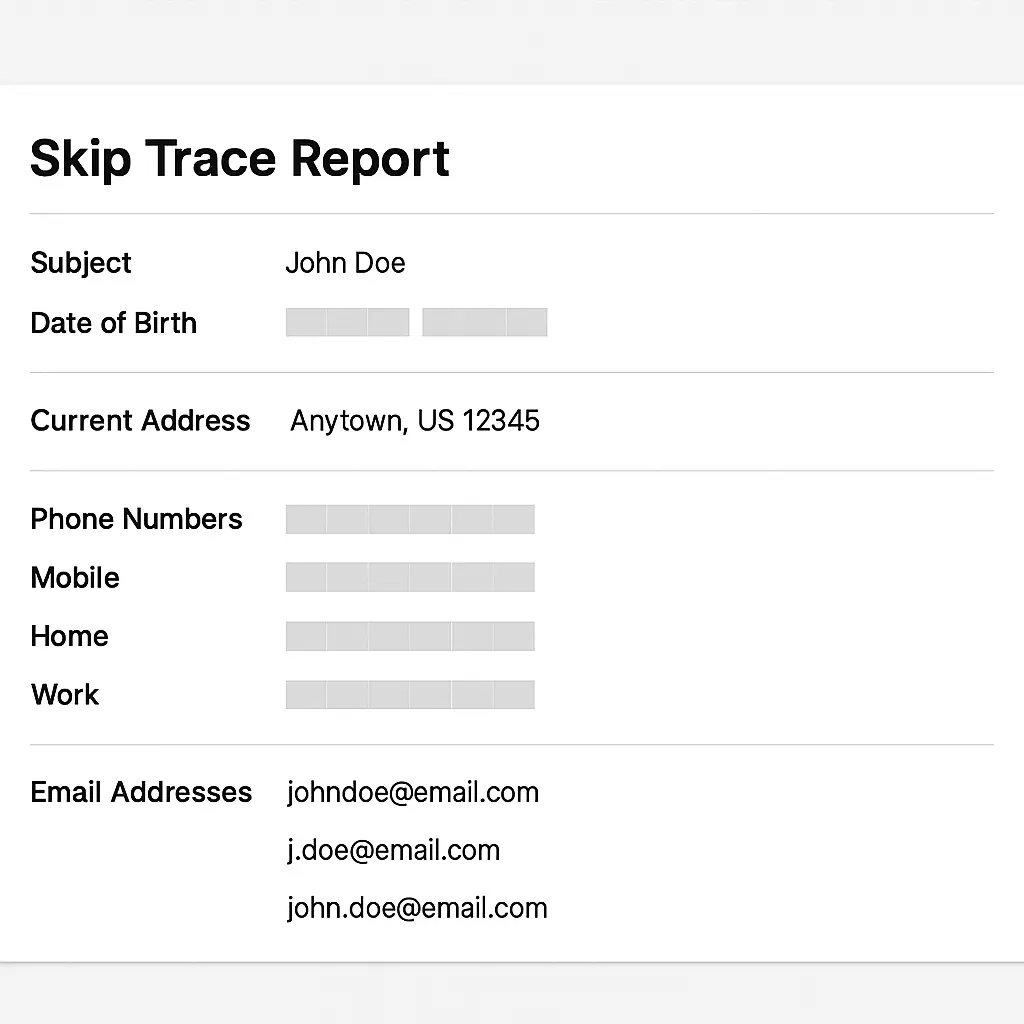
Skip tracing in real estate is the process of finding accurate contact information for property owners who are hard to reach. It answers a simple question investors run into all the time. How do you contact someone who never replies, never updates their address, and never lists their home for sale. That is the entire point of skip tracing.
The term comes from older investigative work. A skip was someone who skipped town or disappeared. Debt collectors and private investigators used public records and data to track them down. The same idea now exists in real estate. Owners move. Mailing addresses change. Properties sit vacant. Many owners do not even know how messy the place has become. Investors use skip tracing to find these people and start a real conversation.
Why Real Estate Uses Skip Tracing Today
Real estate adopted this technique for one reason. Many of the best deals come from owners who are not active in the market. They are not browsing Zillow. They are not interviewing agents. They are not chasing the highest possible sale price. They are simply not paying attention. So skip tracing becomes the bridge that gets you to them first.
This is very different from just Googling someone. A quick Google search might show a Facebook page or an old address. It rarely gives you a current phone number. It rarely gives you alternative contacts. It rarely gives you anything reliable. True skip tracing uses deeper data sources, credit header information, and commercial databases. Services like www.beenverified.com or www.fastpeoplesearch.com give you much better information than a basic search engine.
When you understand this difference, the value becomes obvious. Google shows what people publicly share. Skip tracing shows where they actually are today. And reaching the right person is what opens the door to deals no one else can find.
Why Real Estate Pros Rely on Skip Tracing
Skip tracing became a go to tool for investors because it solves the biggest problem in the market. You cannot buy a deal if
Reaching Owners Others Can’t
The MLS stays crowded and overpriced. Everyone fights over the same ten listings and then acts shocked when the margins disappear. The real money shows up off market. That is where the quiet opportunities sit. These homes never get photographed. They never get staged. They never hit Zillow. They belong to owners who are distracted, overwhelmed, or simply not thinking about selling.
Skip tracing is how investors break through that wall. Instead of waiting for a property to pop up online, you contact the owner directly. You get to them before an agent ever calls. You create the conversation. Most great deals never get listed, and skip tracing puts you right in front of the people holding those deals.
Faster Deal Flow
Driving for dollars is great, but the list means nothing if you cannot turn it into actual conversations. Skip tracing gives you that missing step. You see a distressed property. You save the address. You run a skip trace. Now you have the owner’s number and email. Within minutes you can reach out and feel out their motivation.
This also keeps dead leads from slipping away. When mail gets returned or a seller stops responding, most investors shrug and move on. Skip tracing is how you find the updated contact info and get the conversation going again. It keeps momentum alive in a business where speed matters.
Competitive Advantage
In off market real estate, first contact wins most of the time. If you reach the owner before anyone else, you walk into the deal with leverage. You are not competing with ten other buyers. You are not bidding against the entire MLS. You are talking with someone who probably did not even know they could sell.
This is the difference between a serious investor and a hobbyist. Hobbyists wait for deals to find them. Pros find the people behind the deals. Skip tracing is the quiet separator that gives proactive investors the edge long before anyone else knows the property is even available.
How Skip Tracing Works Step By Step
Skip tracing looks complicated from the outside, but the process is simple once you see it laid out. You start with basic information, run it through stronger data sources, then decide who to actually contact.
Starting With Basic Info
Every skip trace starts with what you already know. This usually means the property address, the owner’s name, and the mailing address on file. That information might come from your county records, your driving for dollars list, or your lead software. Each small detail becomes a starting point that the skip tracing tools can build from.
Names, addresses, and tax records all feed into the search. Small differences in spelling or an old address can change what comes back. Clean inputs usually lead to cleaner outputs.
What Is Skip Tracing In Real Estate Doing Behind The Scenes
Once you submit the basic details, the skip tracing service starts comparing that information against multiple data sources. These can include public records, credit header data, utility connections, and other commercial databases. Sites like www.whitepages.com and www.spokeo.com give a glimpse of this idea, but professional tools go much deeper.
Matching algorithms look for patterns between names, past addresses, and linked records. Different providers use different data sources and different matching rules. That is why one service might return three solid numbers while another gives ten bad ones for the same owner.
What A Skip Trace Report Actually Gives You
A typical skip trace returns several possible phone numbers. It can also return email addresses and updated mailing addresses. Many services include relatives, associates, or past co residents tied to that person as well. Some even flag when an owner is likely deceased, which changes how you approach the lead.
You are not just getting more data for the sake of it. You are getting multiple ways to reach the person who controls the decision.
Accuracy Expectations For Skip Tracing
No skip tracing service is perfect, and none of them are one hundred percent accurate. Batch searches tend to be cheaper but can include more junk numbers. Single search tools cost more per result but sometimes give tighter, more accurate reports.
Verification is always the last step before real outreach. A quick soft text, a simple question, or a short call confirms whether you reached the right person. That one extra filter keeps you from burning time and burning through good leads with bad information.
Types Of Skip Tracing
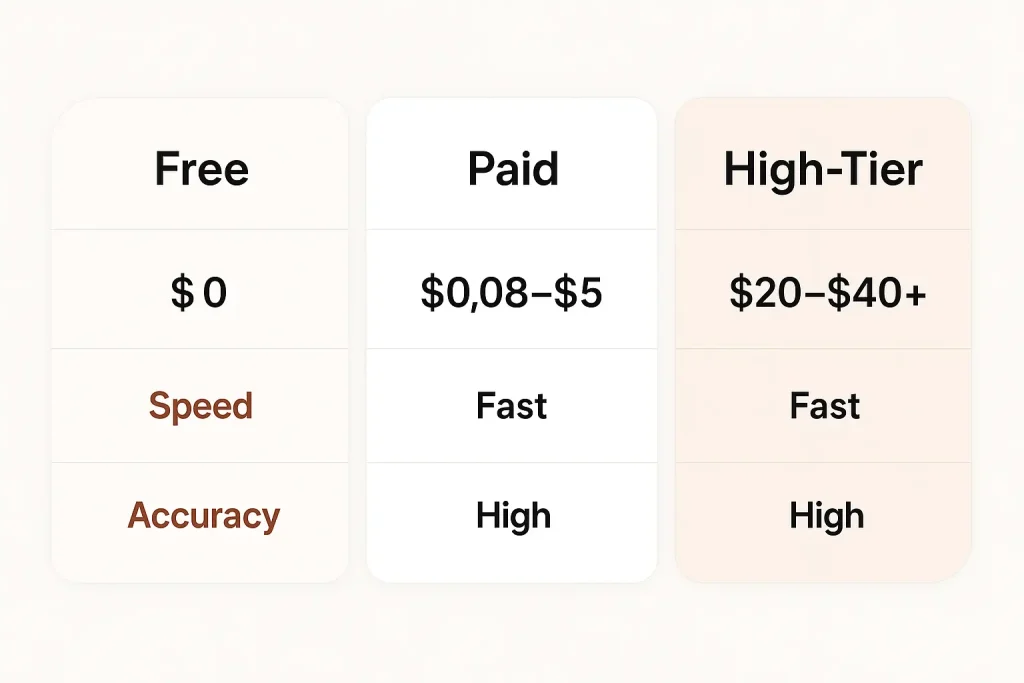
There are three main levels of skip tracing. Each one has a purpose, but they are not equal in speed, accuracy, or cost. Most investors start with the free methods, upgrade to paid tools, then eventually use higher tier services once they start doing volume.
Manual Skip Tracing Using Free Methods
Manual skip tracing is the entry point for most beginners. You look the owner up on Google. You check county property records. You search their name on LinkedIn or Facebook. Sites like www.truepeoplesearch.com and www.fastpeoplesearch.com help too. These tools are free and simple.
The downside is time. Each search becomes guesswork. You might find the right info or you might find five people with the same name. Accuracy stays low and it becomes a grind when you are working through a large list. It is fine for one or two properties but not efficient when you are trying to build steady deal flow.
Paid Skip Tracing For Better Accuracy
Paid skip tracing is where most real investors land. Platforms like www.propstream.com, www.reiskip.com, and www.batchleads.io pull from much stronger data sources. These tools deliver faster results and higher accuracy than free searches. You upload your list or run a single trace and within seconds you have numbers, emails, and updated addresses.
This is where the workflow becomes scalable. You can skip trace hundreds of driving for dollars leads or large lists from tax delinquencies, pre foreclosures, or absentee owners. The information is cleaner and the time savings alone is worth the subscription.
High Tier And Professional Skip Tracing
High tier skip tracing comes from tools like TLO, LexisNexis, and IRB. These are used by attorneys, investigators, and large financial institutions. They offer extremely accurate data, but they require strict verification, licensing, or background checks. Most beginners will not qualify for these platforms.
They become worth it once you start doing serious volume or once your business demands extremely high accuracy on every lead. For the average investor, paid skip tracing platforms get the job done. High tier services are more of a final upgrade once you are deep into the off market world and need top level verification.
Skip Tracing Use Cases In Real Estate

Skip tracing is not just a data tool. It plugs directly into the workflows investors use every day. Once you understand where it fits, the entire off market process becomes faster and more predictable.
Driving For Dollars
Driving for dollars is the most powerful way to find off market leads because you are spotting real conditions, not just filtering a spreadsheet. You see a neglected home. You log the address. You run a skip trace. You call or text the owner. This turns a random drive into a clear system.
It works because the property’s condition already shows the owner may be stressed or unmotivated. Skip tracing gives you the ability to reach them before anyone else even notices the house.
Wholesaling And Off Market Deal Sourcing
Wholesalers rely on skip tracing to identify sellers fast. You cannot assign a contract if you cannot reach the owner. The quicker you identify the right person, the faster you lock in the deal. This is how wholesalers get ahead of agents and other investors. Speed matters in this niche and skip tracing is what gives them that speed.
Most off market deals are won by the first person who makes meaningful contact. Skip tracing puts you in that seat.
Fix And Flip And Rental Investors
Fix and flippers want distressed homes with motivated sellers. Rental investors look for undervalued properties that need work or have absentee owners. Both groups use skip tracing to reach owners who have not listed their homes. Properties with deferred maintenance, outdated systems, or long vacancy periods often lead to good conversations.
It is a direct line to people who may want an easy, fast exit instead of going through repairs, showings, and listing prep.
Follow Up On Unresponsive Owners
Skip tracing shines when communication breaks down. Returned mail is a signal that the mailing address is outdated. Door knocking without an answer might mean the owner does not live there anymore. A seller who once replied but now ghosts you might have changed numbers.
Instead of guessing, you run the skip trace again. Updated contact info gives you another shot at the conversation. This keeps opportunities alive far longer than traditional outreach methods.
Is Skip Tracing Legal
Skip tracing is legal when you follow the rules. Investors use it every day to reach property owners, lenders use it to track borrowers, and attorneys use it for court-related work. Real estate simply adopted the same process because so many off market sellers are hard to reach. There is nothing shady about finding public information as long as you stay within the law.
The Short Answer And Why Real Estate Uses It
Skip tracing falls under the umbrella of gathering publicly available contact data. You are not accessing private credit reports or breaking into locked databases. You are using lawful tools that aggregate public records, utility data, and commercially available sources. That is why it is widely used in real estate. It helps investors reach owners who never update their mailing address, ignore direct mail, or have a vacant property with no obvious point of contact.
The problems start only when people misuse the data or ignore communication laws.
Regulations You Need To Know
Even though skip tracing is legal, you still need to operate within three main rules.
FCRA
The Fair Credit Reporting Act restricts how credit data can be used. Real estate investors are not allowed to pull someone’s actual credit report. Reputable skip tracing platforms avoid FCRA-restricted data, which keeps you compliant.
GLBA
The Gramm Leach Bliley Act protects sensitive personal information. This limits the type of financial data that can be shared or sold. Good skip tracing providers filter out anything that falls into this protected category.
TCPA
The Telephone Consumer Protection Act governs how you call or text people. This matters if you do cold calling or SMS outreach. You must avoid auto dialers and respect do not call lists. Texting must be done manually or through compliant systems. If someone asks to stop, you stop.
These laws are why reputable providers matter. Companies like PropStream or Batch Leads design their data and tools around these regulations. Free sources are fine for casual lookups, but when you start contacting owners, you want a provider that keeps everything above board.
What Skip Tracing Costs
Skip tracing costs depend on the level of accuracy you want and how fast you need the information. Free tools work when you are poking around, but once you start chasing real off market deals, paid options become the only practical route.
Typical Costs Per Lead
Batch skip tracing usually runs between eight cents and twenty five cents per lead. This is what most investors use when they pull large lists or upload big driving for dollars files. Premium single searches range from one dollar to five dollars depending on the platform. These cost more because they pull deeper data and return cleaner results.
Free methods cost nothing except your time. The problem is that time adds up quickly when you are trying to work through an entire list.
Free vs Paid vs High Tier Costs
Free skip tracing is fine when you are learning or testing the waters. You rely on Google, Facebook, county records, and sites like fastpeoplesearch.com. The tradeoff is low accuracy, missing data, and a lot of guesswork.
Paid skip tracing from PropStream, Batch Leads, or REISkip sits in the middle. The pricing stays low enough to use at scale, but the quality is far higher than anything free. You get actual phone numbers, emails, and updated addresses in seconds.
High tier skip tracing from TLO, LexisNexis, or IRB is the most accurate but also the most expensive. These tools are built for law firms, investigators, and financial institutions. Most investors never need this level unless they are handling massive volume or complex cases.
When Paying More Actually Saves Money
Cheap data becomes expensive when it sends you in the wrong direction. Calling bad numbers burns hours. Chasing outdated addresses wastes gas. Missing a motivated seller because the free search pulled nothing is even worse.
Paying a little more for accurate skip tracing saves money by giving you the right person on the first try. It cuts down follow up time and increases your contact rate. That alone pays for the upgrade long before you land your first deal.
Common Beginner Mistakes
Beginners run into the same problems over and over again when they start skip tracing. None of these mistakes are fatal, but they slow you down and make the whole process feel harder than it is.
Relying Only On Free Skip Tracing
Free sites feel convenient until you realize how inconsistent they are. You might get one good number, then ten dead ends in a row. Relying only on free methods keeps you spinning your wheels. Paid tools exist for a reason. They save time and make the entire workflow smoother.
Not Verifying Who They Contact
Many new investors grab the first number on the list and assume it is the owner. That is how awkward conversations happen. A quick verification text or a simple question keeps you from talking to the wrong person. Skip tracing is about contact, but it is also about confirming accuracy before you dive in.
Calling Blindly Without A Script
Cold calling without a plan is a fast way to freeze up. You do not need a word for word script, but you do need a clean opener and a simple way to steer the conversation. A good script keeps you calm and sets the tone. You sound confident instead of desperate.
Not Tracking Numbers Or Results
If you are not logging who you called, which numbers were good, and who told you no, then you are guessing your way through the process. Tracking your calls helps you clean your list, follow up properly, and avoid contacting the same person multiple times. Pros track everything. Beginners trust their memory and fall behind.
Thinking Skip Tracing Is Illegal
A lot of people assume skip tracing is shady because it sounds like detective work. It is not. It is a standard tool used in real estate, collections, and legal work. As long as you follow communication laws and use reputable providers, you are operating well within the rules. The people who think skip tracing is illegal usually just misunderstand how the data is gathered.
Skip tracing is only complicated when you treat it like a mystery. Once you understand the process, these mistakes fade fast and your contact rate jumps.
Real World Example: Turning A Lead Into A Deal
Here is a simple walk through of how skip tracing turns a random address into a real opportunity.
You are driving through a neighborhood and notice a house with overgrown grass, peeling paint, and piled up mail on the porch. Nothing dramatic, but enough to tell you no one has cared for the place in a long time. You save the address and head home.
You run a skip trace on the property. The owner’s mailing address is in another state. That is usually a sign of an absentee landlord or someone who inherited the home. The skip trace gives you a few phone numbers and an email. One of the numbers has recent activity, so you start with that.
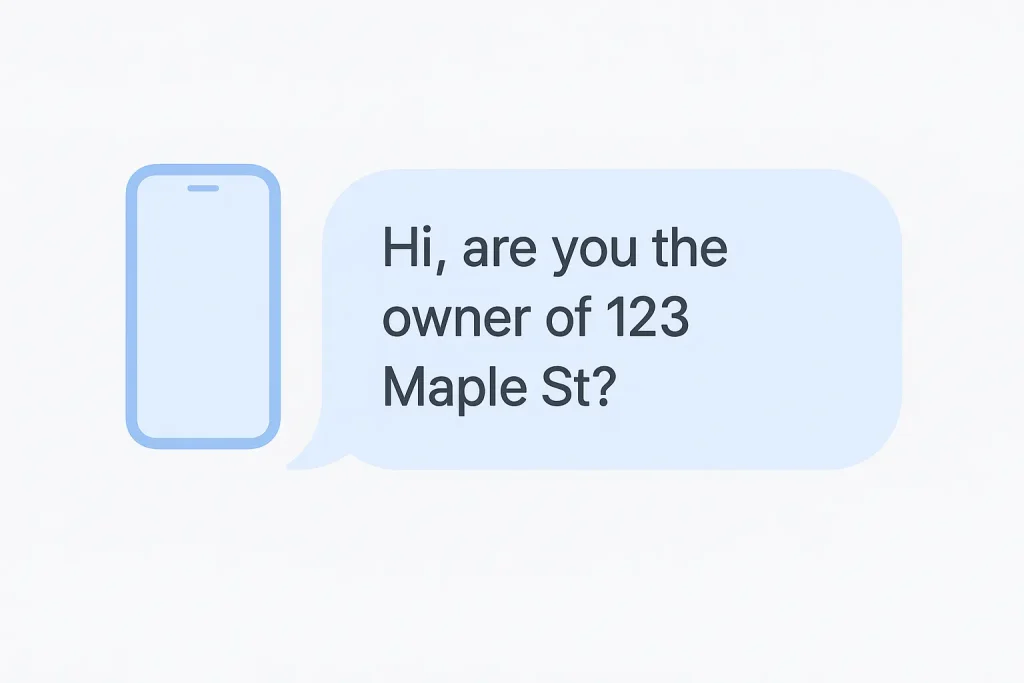
You send a simple text. Something like, Hey, not sure if I have the right person. Are you the owner of the home on Maple Street. The owner replies. Turns out they moved years ago and have not seen the property since. The condition does not surprise them. They admit they have been thinking about selling but never got around to it.
Because you reached them first, you are not competing with other buyers. You schedule a quick call, look at the numbers, and explain the repairs the home will need. They do not want to deal with fixing anything. You negotiate a discount that works for both sides.
All of this starts from one skipped property and one skip trace. It is the simplest example of how off market deals actually happen.
When You Should Skip Trace A Property
Skip tracing becomes the right move any time a property shows clear signs that the owner is either unavailable, overwhelmed, or simply not paying attention. These are the situations where direct outreach gives you a real edge.
Vacant Homes
A vacant home is one of the strongest signals you can find. Overgrown yards, boarded windows, stacked mail, or utilities shut off all point to an owner who is checked out. Vacant properties often lead to fast, clean conversations once you track down the right contact information.
Absentee Owners
Owners who live out of state or across town often have no idea what their property looks like today. These are common rental situations where the landlord is tired, distracted, or ready to cash out. Skip tracing helps you reach them directly instead of hoping mail gets forwarded.
Preforeclosure
Properties in preforeclosure show up in public notices before the bank takes action. Owners in this stage are overwhelmed and usually open to solutions. Skip tracing lets you contact them before the auction is scheduled and long before agents or competitors step in.
Tax Delinquent
Tax delinquency is another signal of financial stress. When a property shows unpaid taxes, odds are the owner is either struggling or intentionally ignoring the issue. A quick skip trace helps you reach them at a time when they may be open to selling.
Probate Leads
Inherited properties often sit untouched for months. Family members live out of state. Estates move slowly. No one has a plan. These are perfect candidates for skip tracing because the listed address rarely matches the person now responsible for the property.
Returned Direct Mail
Returned mail is a gift. It tells you the address is outdated, the owner moved, or the home is vacant. Instead of discarding the lead, you run a skip trace to find a current address or phone number. Most investors toss these. The ones who follow up win deals.
High Equity Properties Showing Neglect
A home with peeling paint, sagging gutters, old systems, or clear deferred maintenance combined with high equity creates a motivated seller profile. These owners often do not want to put money into repairs. Reaching them through skip tracing can open the door to fast, simple offers.
Skip tracing is not something you do randomly. You do it when the property itself is already telling you a story. All you need is a way to reach the person behind it.
Best Skip Tracing Tools for Investors
| Tool | Pros | Cons | Accuracy |
|---|---|---|---|
| PropStream | Fast, accurate, built for real estate, great for lists + contact info | Subscription required | Strong on most properties |
| Batch Leads | Best for bulk skip tracing, scalable workflow | More junk numbers in large batches | Good for large lists |
| BeenVerified | Easy one-off searches | Not real-estate specific | Hit or miss |
| REISkip | Designed for investors, solid owner matching | Inconsistent in smaller markets | Variable but useful |
| TruePeopleSearch (free) | Free and simple | Outdated, low reliability | Low |
How To Use Skip Tracing Inside Your Deal Finding System
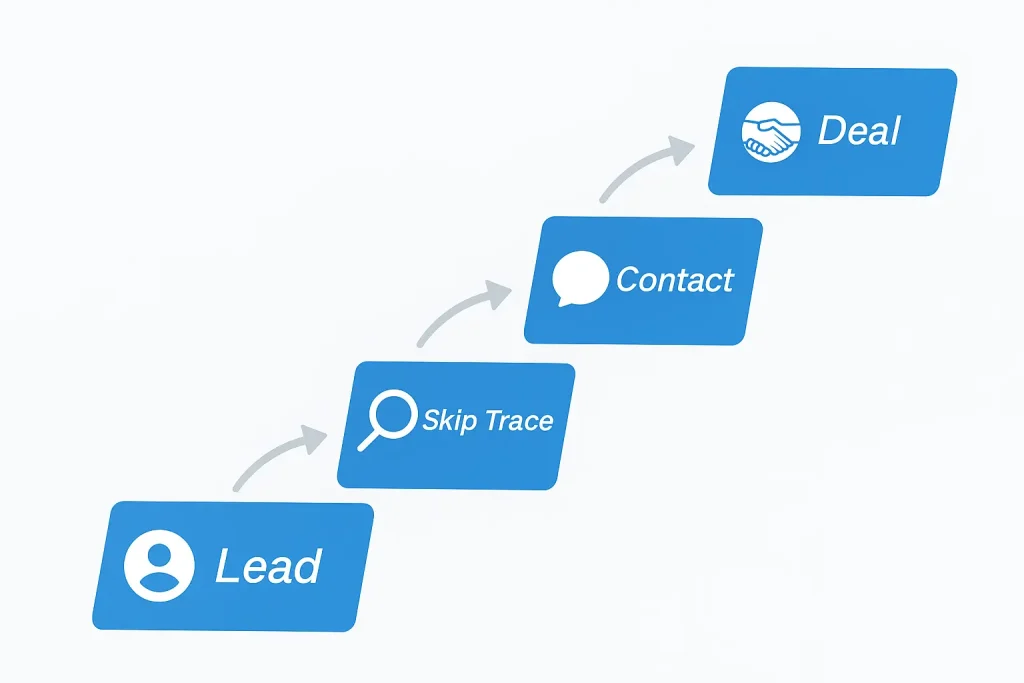
Skip tracing becomes powerful when it fits into a simple, repeatable system. Pros do not treat it as a random lookup. They build it into their off market pipeline so every lead moves in the same direction.
Source Leads
You start with raw leads. Driving for dollars, tax delinquent lists, preforeclosures, probate, or returned mail. These leads mean nothing until you turn them into real conversations.
Skip Trace
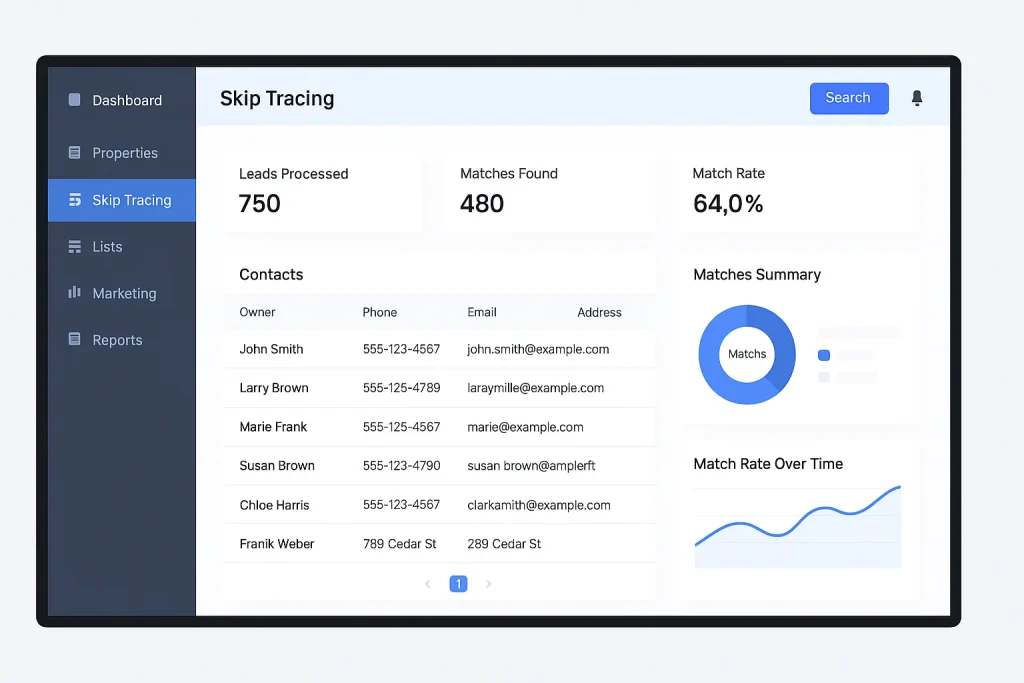
Next, you run each lead through your skip tracing tool. This gives you phone numbers, emails, and updated addresses. Now you have everything you need to reach the owner directly instead of waiting for them to appear on the MLS.
Contact The Owner
Once you have the info, you reach out. A quick text, a soft opener, or a simple call works. The goal is not to pitch. It is to confirm ownership and start a normal conversation.
Qualify Motivation
You ask the right questions. Are they open to selling. What is the property condition. Do they live nearby. Are they tired of repairs or dealing with renters. Some will shut you down. Some will open up. You only need a few yes answers to move forward.
Make The Offer
If the motivation is real, you make your offer. Keep it simple. Focus on solving their problem. Off market deals work because you are offering speed, convenience, and certainty they will not get from the MLS.
Follow Up Consistently
Most owners will not say yes on the first call. This is where skip tracing pays off long term. You now have multiple ways to reach them, which means you can follow up without guessing. Pros win deals months after the first conversation because they stay consistent.
Why Consistency Beats Talent
You do not need to be the smoothest talker or the most experienced negotiator. You only need a clean system you repeat every week. Source leads, skip trace, contact, qualify, offer, follow up. Over time, your pipeline fills itself.
How Pros Build Predictable Deal Flow
Predictability comes from volume and repetition. Every lead enters the same process. Nothing slips through the cracks. Every month, a few leads turn into real opportunities because you keep showing up.
Skip tracing is not the magic. The system is the magic. Skip tracing just unlocks the people you need to talk to so the rest of your pipeline can do its job.
Conclusion

Skip tracing is the unlock to hidden deals. It gives you direct access to owners most investors will never reach. That is why the pros rely on it. They know the real opportunities sit off market, behind old addresses, outdated records, and owners who are not paying attention.
When you can find these owners, you stop competing with the entire MLS. You stop fighting over the same overpriced listings. You reach sellers first, build real conversations, and negotiate from a position of strength.
If you want predictable deal flow, skip tracing becomes part of your system. And once you plug it into your weekly routine, the entire game changes.
If you are ready to start finding off market deals the way real investors do, take the next step. Start building your list, run your skip traces, and reach the people no one else even knows are selling.