
Why “More Leads” Is the Wrong Question
Most people searching for real estate investor leads think they’re asking the right question.
They’re not.
The issue usually isn’t that deals don’t exist. It’s that everything they’re chasing has already been chased, priced, packaged, and blasted to every other investor in the same zip code. When everyone has access to the same opportunities, the only lever left to pull is price. And price competition quietly destroys margins.
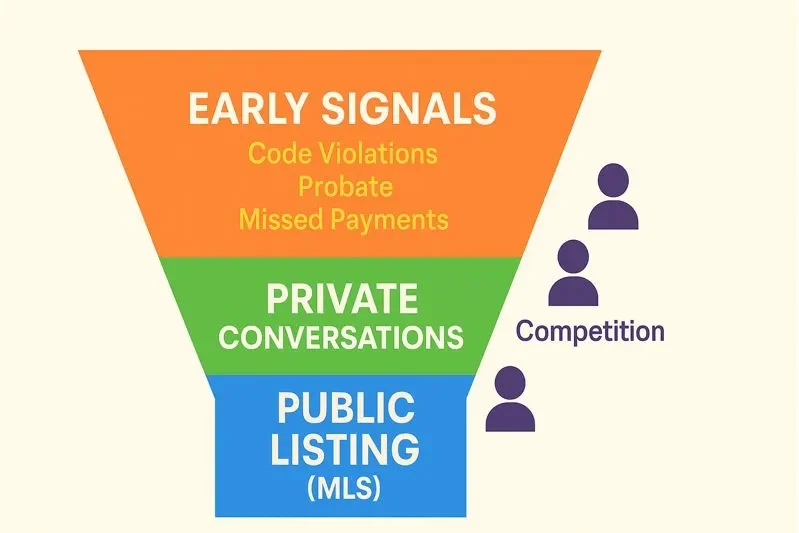
This is where understanding The Off Market Deal Method changes the conversation. Off-market deals aren’t about secrecy or gimmicks. They’re about timing, positioning, and showing up before a situation becomes public inventory.
Most investors don’t actually have a lead problem. They have a filtering and positioning problem.
Filtering determines which situations are even worth your time. Positioning determines why a seller would talk to you instead of the next person sending a postcard or text message. Without those two pieces, more leads just means more conversations that go nowhere.
That distinction is what separates investors who stay busy from investors who consistently close.
What Most People Think Investor Leads Are (And Why They Stall Out)
Most investors start in the same places because those places are obvious, accessible, and feel productive.
That’s not an accident. It’s also the reason they stop working faster than most people expect.
When someone says they’re looking for real estate investor leads, what they usually mean is “where can I see deals right now.” Visibility feels like progress. Exposure feels like opportunity. But visibility is also what attracts competition.
Once you understand that, the stall-out makes more sense.
The Common Places Everyone Starts

Most investors begin with sources that surface deals after they’re already public.
MLS alerts are usually first. You set filters, wait for emails, and hope something slips through. Sometimes it does. Most of the time, it doesn’t.
Wholesaler blast lists come next. Deals pushed to hundreds or thousands of inboxes at once, all framed as “off-market” while still being shopped aggressively.
Facebook groups and deal boards follow the same pattern. Loud, crowded, and optimized for speed instead of selectivity.
Then there are paid “motivated seller” lead vendors. Lists packaged as exclusive but often sold multiple times, pulled from the same public data everyone else is using.
These sources aren’t useless. They’re just late.
They show you opportunities after they’ve already been exposed to the market.
The Hidden Problem With Public Investor Leads
The real issue isn’t effort. It’s timing.
These leads are already priced for competition. By the time you see them, sellers know investors are circling. They know offers are coming. They’ve been told their house is “hot,” even if nothing has actually happened yet.
That changes behavior.
Sellers anchor higher. Flexibility disappears. Negotiations start defensive instead of collaborative. Every conversation becomes a comparison instead of a problem-solving discussion.
Margins collapse before you ever talk numbers.
This is why investors feel like deals are getting tighter even when activity is high. The work happens after the advantage is gone.
If everyone can see the lead, it’s no longer a lead.
It’s inventory.
And inventory forces you to compete on price, speed, or concessions. None of those scale well over time.
That’s the stall point most investors never diagnose.
How Top Investors Define a “Lead” Differently
Top investors don’t disagree that public listings exist. They just don’t confuse visibility with opportunity.
The difference is in definition.
Where most people see a lead as a property they can point to, experienced investors see a lead as a moment. A temporary imbalance where the seller’s situation matters more than the house itself. That shift changes what you look for and when you engage.
Once you understand this, the noise starts to fall away.
A Real Lead vs a Public Listing

A listing is a signal. It tells you a property is for sale and the seller is open to offers. That’s useful information, but it’s also information everyone else has at the same time.
A real lead is different. It exists before the signal.
It’s a moment of imbalance where something is pushing the seller toward a decision, but they haven’t fully adjusted yet. That pressure can come from time constraints, missing information, or emotional overload. The common thread is urgency without clarity.
Time pressure shows up when deadlines matter more than price. Information gaps appear when sellers don’t yet understand their options. Emotional decision windows open when stress makes “good enough” feel better than “perfect.”
These moments don’t last long. That’s why they rarely show up cleanly on public platforms.
What Top Investors Actually Look For
Experienced investors spend less time analyzing countertops and more time understanding context.
They look for life disruption, not property condition. Job changes, health issues, family transitions, or estate complications create movement long before a house hits the market.
They pay attention to decision fatigue, not motivation buzzwords. Sellers don’t wake up motivated. They get tired. Of managing, deciding, fixing, and waiting.
They rely on asymmetric information, not exposure. Knowing something earlier or seeing it differently is more valuable than seeing it first on a listing feed.
This is the core mindset shift most investors never make.
Top investors aren’t hunting houses.
They’re hunting situations.
Once you start thinking this way, lead generation becomes less about volume and more about awareness.
The Quiet Lead Sources Professionals Rely On
Once investors stop chasing visibility, their lead sources get quieter.
Not smaller. Quieter.
These are the channels that don’t feel busy, don’t look impressive on a spreadsheet, and don’t generate instant feedback. They also tend to produce the cleanest conversations and the least competition.
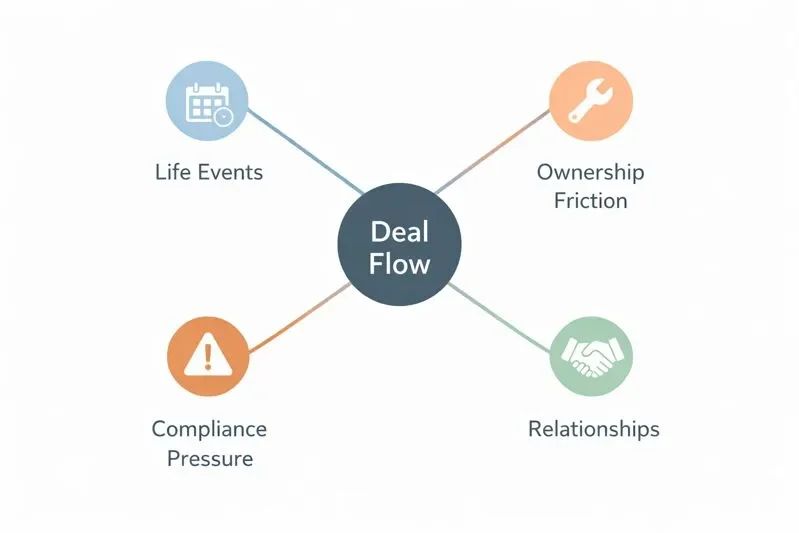
The common thread across all of them is timing. You’re showing up before a seller has turned their situation into a listing.
Life-Event Driven Leads
Life events create pressure long before a property ever becomes “for sale.”
Probate situations often surface months before an estate is formally liquidated. Divorce filings usually happen before either party has emotionally accepted selling. Job relocations introduce deadlines that don’t care about market conditions. Health-driven downsizing creates urgency paired with exhaustion.
These sellers aren’t shopping for offers yet. They’re trying to regain stability.
That’s why these leads work. You’re not competing against other buyers. You’re helping someone think through a decision they haven’t fully framed. By the time the story becomes public, the leverage is already gone.
Arriving early changes the entire tone of the conversation.
Ownership Friction Leads
Ownership friction builds slowly and rarely announces itself.
Absentee owners with long hold periods start noticing the drag before they admit it’s a problem. Self-managed landlords don’t quit overnight; they burn out over time. Inherited properties often sit in limbo while heirs disagree or avoid decisions. Partial equity situations get stuck when titles, responsibilities, and expectations don’t line up.
The pain here isn’t dramatic. It’s persistent.
That’s what makes these leads powerful. Motivation compounds quietly. When action finally happens, it tends to happen fast because the decision has been deferred for too long already.
Compliance & Penalty Triggers
External pressure forces clarity.
Code enforcement issues, municipal fines, zoning violations, and deferred maintenance citations introduce deadlines that sellers can’t ignore. Unlike internal motivation, penalties don’t care how someone feels about selling.
This is why these leads convert differently. The decision isn’t about maximizing price anymore. It’s about stopping the bleeding.
When timelines are imposed from the outside, hesitation disappears. Conversations become practical instead of emotional, and resolution matters more than perfection.
Relationship-Based Lead Channels
Some of the best deal flow never touches marketing at all.
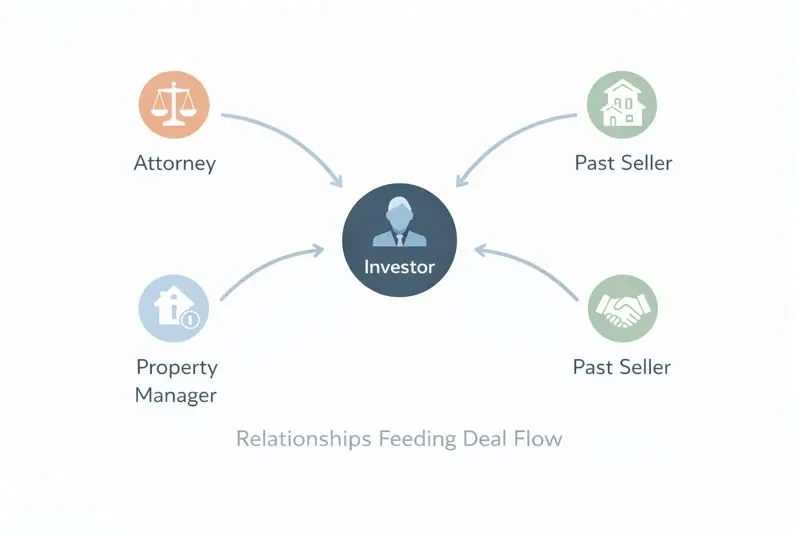
Attorneys see situations before they turn into transactions. Accountants notice cash strain before properties get listed. Property managers feel landlord fatigue firsthand. Local contractors spot deferred repairs long before they show up in disclosures.
These channels work because they transfer trust.
There’s no public competition, no blasting, no bidding wars. Just quiet referrals from people who already understand the problem. Over time, this creates repeat deal flow that’s hard to replicate and even harder to disrupt.
This is what professional lead generation looks like when it matures.
What Top Investors Avoid (Even When It Looks Busy)
One of the fastest ways to spot experience is by what an investor refuses to do.
Not because it doesn’t work in theory, but because it creates problems downstream. The busiest channels often produce the least control, and control is what keeps deal flow predictable.
Activity can feel like momentum. In reality, it often hides inefficiency.
High-Noise, Low-Control Channels
Over-marketed SMS lists are a common trap. Sellers receive dozens of nearly identical messages, and investors end up racing to the bottom just to get a reply. The volume looks impressive, but the conversations are shallow and defensive.
Nationwide PPC without local authority creates a similar issue. You pay for attention without trust. Sellers click, price-shop, and move on because nothing differentiates you from the next ad below yours.
Non-segmented cold calling wastes leverage. Without context, every call starts cold and stays cold. You spend time explaining who you are instead of why the conversation matters.
Buying lists without layering information is another quiet killer. Raw data feels actionable, but without context, it forces you to guess at motivation instead of recognizing it.
Busy doesn’t mean effective.
The Real Cost of Chasing Noise
The damage isn’t immediate. That’s why these channels stick around.
Time disappears first. Hours go into conversations that never had a chance. Then brand dilution sets in. You become another interchangeable investor instead of a credible solution.
Seller distrust follows. When everyone sounds the same, sellers assume everyone behaves the same. Even good offers get treated with suspicion.
Eventually, deal fatigue shows up. You’re exhausted, not from closing deals, but from almost closing them.
This is the hard truth most investors learn late.
Being busy chasing leads often replaces actually doing deals.
The Lead Stacking Method Top Investors Use
Top investors don’t rely on single lists.
They rely on context.
A single data point can tell you what is happening. Stacked signals tell you why it’s happening and how soon a decision is likely. That difference is what turns outreach into conversations instead of resistance.
This is where real estate investor leads stop being a numbers game and start becoming a pattern-recognition skill.
Why Single Lists Don’t Convert

A list by itself is just a snapshot. Absentee owner. Probate. Code violation. Useful, but incomplete.
On their own, these signals don’t explain urgency. They don’t tell you whether the seller is early, overwhelmed, or already burned out from investor outreach. You end up guessing, and guessing creates friction.
That’s why investors relying on single lists feel like they’re doing a lot of work for very little payoff. They’re reacting instead of anticipating.
Context is what bridges that gap.
How Top Investors Stack Signals
Stacking means combining signals that reinforce each other.
An absentee owner with a code violation isn’t just hands-off. They’re exposed to consequences. Probate paired with tax delinquency suggests delay and pressure colliding at the same time. A long-term hold combined with an eviction filing points to landlord fatigue reaching a breaking point. Equity layered with a life event introduces options but limits patience.
Each layer narrows the field.
Instead of more leads, you get fewer, more relevant situations where action is more likely and conversations start warmer.
That’s why stacking works. It reduces volume while increasing clarity. Negotiations shorten because sellers already feel the weight of the situation. You’re not convincing them to sell. You’re helping them decide.
This is how professionals create deal flow without chasing it.
Follow-Up Is Where Deals Are Actually Won
Most deals don’t fall apart because the numbers don’t work.
They fall apart because the investor disappears too early.
Lead generation gets all the attention, but follow-up is where outcomes are decided. Especially with real estate investor leads, timing matters more than persuasion, and timing almost always requires patience.
Why Most Leads “Die”
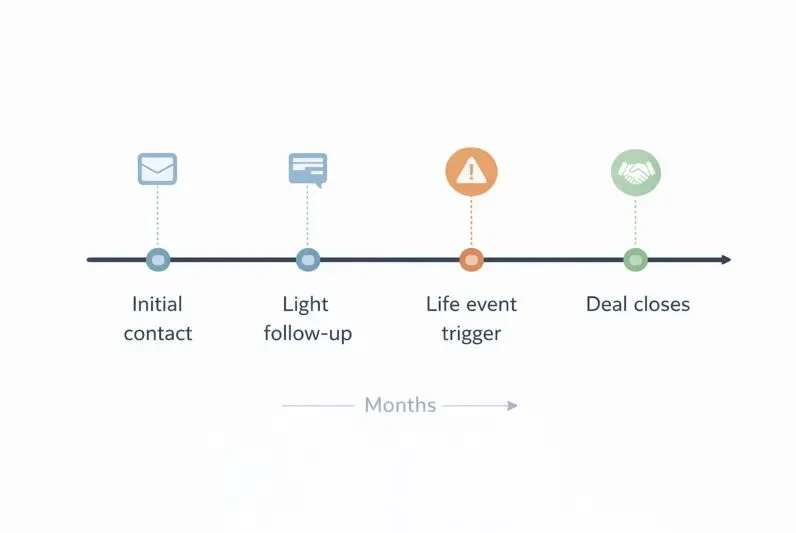
Most investors stop after two or three touches. A call, maybe a text, one follow-up, and then the lead gets labeled as “not motivated.”
That’s rarely true.
Sellers aren’t ready yet. They’re processing. Comparing options. Hoping the situation resolves itself. When an investor shows up too early, silence isn’t rejection. It’s hesitation.
A timing mismatch gets mistaken for a bad lead. That misunderstanding quietly wipes out future deals.
The irony is that many of these sellers will sell eventually. Just not on the investor’s preferred schedule.
What Top Investors Do Instead
Experienced investors design follow-up systems that assume delay.
They don’t chase daily, but they don’t disappear either. Long-term follow-up keeps the door open without pressure. Check-ins are framed around value, not offers. Updates, options, and reminders that you exist when circumstances change.
The tone stays low-pressure. The messaging stays relevant. Context from earlier conversations guides what gets said and what gets left alone.
Over time, familiarity replaces skepticism.
This is the part most investors underestimate. Deals don’t usually close because someone said the perfect thing. They close because the investor was still there when the seller was finally ready.
That’s the reality.
Most profitable deals come from patience, not persuasion.
Beginner vs Professional Lead Strategies (Choose One)

Most investors get into trouble when they mix stages.
They try to operate like professionals before they understand why deals work, or they stay in beginner mode long after they should’ve tightened their systems. Lead strategy isn’t about ambition. It’s about alignment.
You have to choose the lane you’re in and build accordingly.
Beginner Investor Lead Strategies
Beginners should do less, not more.
Fewer channels create focus. Manual outreach forces learning. Deep follow-up builds pattern recognition you can’t get from dashboards or automation. This is where seller psychology actually clicks.
Every conversation teaches you something. Why people hesitate. What stress sounds like. When urgency is real versus performative.
This stage isn’t about efficiency. It’s about understanding. Rushing past it creates blind spots that surface later as expensive mistakes.
Professional Investor Lead Strategies
Professionals narrow instead of expand.
They choose channels they understand deeply and systemize intake so nothing gets lost. Signal stacking replaces gut feeling. Deal flow forecasting replaces hope.
The goal shifts from finding a deal to maintaining consistent decision-ready conversations.
This only works after lead quality is clear. Systems amplify whatever you already have. If your inputs are weak, scaling just multiplies the problem.
That’s the warning most people ignore.
Trying to scale before understanding lead quality breaks investors fast.
The Truth About Scaling Investor Leads
Scaling breaks most investors because they try to grow volume before they understand leverage.
More marketing feels like the obvious answer. More spend. More lists. More outreach. For a short period, it works. Then returns flatten, costs rise, and effort compounds without proportional results.
That’s not a funnel problem. It’s a positioning problem.
Why “More Marketing” Stops Working
Marketing scales exposure, not advantage.
As you increase spend, you attract more of the same conversations you were already having. The only difference is you’re paying more to have them. Without better filtering, volume just accelerates burnout.
This is where many investors feel like the market “changed,” when in reality, they outgrew their strategy.
How Competition Compresses Returns
Competition doesn’t eliminate deals. It compresses margins.
As more investors chase the same visible opportunities, sellers anchor higher and negotiations start closer to retail. Even strong underwriting can’t fix a deal that begins without leverage.
Over time, the spread disappears. What used to be a good deal becomes a break-even one, then a pass.
This is the silent tax of crowded lead sources.
Why Authority and Positioning Matter More Than Spend
Authority shortens conversations. Positioning shapes expectations.
When sellers already understand who you are and why you’re relevant, price becomes one variable instead of the only one. Trust replaces urgency. Context replaces comparison.
This can’t be bought overnight. It’s built through consistency, clarity, and restraint.
The Long-Term Advantage of Proprietary Lead Ecosystems
The strongest investors eventually stop renting attention.
They build ecosystems where leads come from relationships, reputation, and repeat patterns. Past sellers refer. Professionals remember you. Situations resurface.
These ecosystems are quieter, slower to build, and incredibly hard to copy.
That’s the real advantage of scale.
Not more leads, but better ones arriving earlier and with less resistance.
The Real Advantage Isn’t the Lead, It’s the Timing

Leads don’t disappear. They move.
They shift from quiet pressure to public exposure, from internal debate to visible listings. Most investors only notice them once that shift is complete. By then, the advantage is already gone.
That’s why so many investors feel like they’re always late.
They show up after the story has been told, after expectations have been set, and after competition has arrived. At that point, you’re negotiating inside a box someone else built.
Top investors operate earlier.
They arrive quietly, before decisions are finalized and before sellers feel watched. They don’t rush. They don’t blast. They stay consistent, knowing that timing does more work than tactics ever will.
This is the real edge in real estate investor leads.
Not access. Not volume. Timing.
The best investor leads are found where sellers haven’t decided to sell yet.