
Why Finding Deals First Is the Only Real Advantage
Most people think the hardest part of real estate is money, timing, or market conditions. In reality, the real bottleneck is access. If you’re trying to learn how to find real estate deals, you’ve probably already noticed that anything labeled a “great deal” online is usually gone by the time you see it.
That’s not bad luck. That’s how the market actually works.
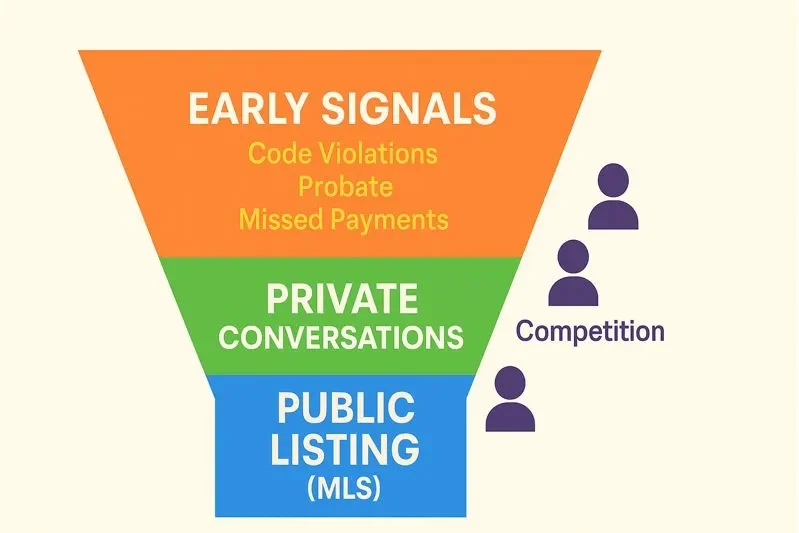
By the time a property is obvious, widely advertised, and sitting on every major listing site, the advantage has already disappeared. The price has been tested. The story has been cleaned up. The competition has arrived. What you’re left with is a decision, not an opportunity. This is why many experienced investors quietly rely on what I break down in the off market deal method, where deals surface long before they’re ever marketed publicly.
This is where most people get stuck. They spend their time refreshing listings, waiting for alerts, and hoping something slips through the cracks. That’s not deal finding. That’s reacting.
What a “Real Deal” Actually Means in Today’s Market
A real deal today is not simply a house listed below a Zestimate or a property that “feels cheap.” In this market, a deal is any property where the numbers work relative to risk, not relative to asking price. That distinction matters more now than it ever has.
Below market value and perceived value are not the same thing. Below market value is objective. It shows up in the comps. Perceived value is emotional. It’s created by bad photos, poor marketing, or seller fatigue. Most opportunities today come from perception gaps, not fire-sale pricing. If you only chase obvious discounts, you’ll miss most of what actually works.
The same applies to how returns show up. Some deals pay you every month through cash flow. Others quietly build wealth through equity. Many of the strongest opportunities now are hybrid deals that do a little of both. Cash flow alone is harder to force at today’s rates. Equity alone ties up capital. The right deal balances both based on your timeline, not someone else’s spreadsheet.
This is why yesterday’s definition of a deal no longer works. The old playbook assumed cheap debt, rising prices, and endless buyers. That environment covered up mistakes. Today’s market exposes them. Thin margins get punished. Over-optimism shows up fast. Deals have to be tighter because the room for error is smaller.
For a deal to actually exist, three conditions must be present.
First is motivation. Someone on the other side needs a reason to act. Convenience, stress, timing, or life changes matter more than list price.
Second is mispricing. That doesn’t always mean underpriced. It can mean poorly positioned, misunderstood, or ignored.
Third is timing. Not market timing, but situational timing. When motivation and mispricing overlap at the right moment, opportunities appear.
Miss any one of these, and you’re just shopping.
Why Most Investors Never See the Best Deals
Most investors don’t miss good deals because they aren’t smart enough. They miss them because they’re looking in the exact same places as everyone else. When thousands of people are scanning the same platforms, the outcome is predictable. The best opportunities get bid up quickly, and what’s left requires either luck or compromise.
Searching where everyone else searches creates competition by default. Public listing sites are efficient by design. They surface information fast and widely. That efficiency works against you if your goal is to be early. When a deal shows up there, it’s already been seen, evaluated, and filtered by the market.
Another common issue is relying on alerts instead of systems. Alerts are reactive. They notify you after something happens. Systems put you in position before it does. An alert tells you a property was listed. A system tells you why it’s likely to be listed soon. That difference determines whether you’re competing or choosing.
Many investors also wait for listings instead of seller signals. They focus on properties, not people. Listings are the final step of a longer process. Seller signals appear earlier. Life events, financial pressure, deferred maintenance, and time all leave clues. When you learn to recognize those signals, you stop waiting and start anticipating.
The last trap is confusing activity with effectiveness. Pulling lists, running numbers, sending offers, and touring properties feels productive. But motion doesn’t equal progress. Effectiveness comes from doing fewer things that actually create leverage. The investors who consistently see the best deals aren’t busier. They’re more precise.
Once you understand this, the goal shifts from doing more to positioning better.
How Deals Actually Surface Before They Hit the Market
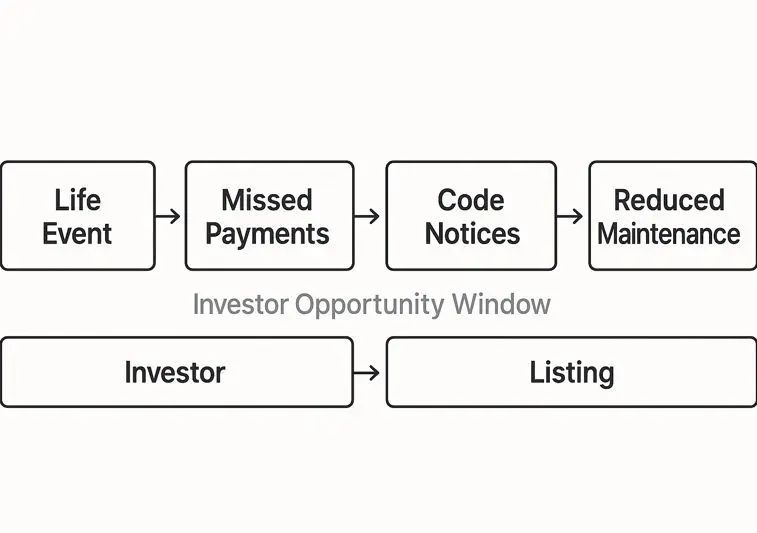
Deals don’t suddenly appear one morning on a listing site. They surface slowly, often quietly, and usually long before anyone labels them as opportunities. If you understand how to find real estate deals consistently, you stop waiting for inventory and start paying attention to patterns.
Real deals leak.
They leak through paperwork, behavior, and neglect. They show up in public records, in maintenance issues that never get fixed, and in owners who have simply run out of patience. By the time a property is officially for sale, most of that story has already played out. The market just hasn’t priced it yet.
There are early signals most people walk right past.
Code violations are one of them. When a property accumulates repeated violations, it’s rarely about the fine itself. It’s usually a sign of disengagement. Owners who can’t or won’t correct basic issues are often dealing with something larger behind the scenes.
Probate filings are another. These aren’t distress events in the traditional sense, but they do create forced decisions. Heirs often inherit property they don’t want, don’t live near, or don’t know how to manage. Time, not price, becomes the pressure point.
Pre-foreclosure timelines matter more than foreclosure auctions. Missed payments start a clock. That clock creates urgency well before any public sale date. Investors who understand these timelines aren’t rushing auctions. They’re having conversations earlier.
Then there’s long-term ownership fatigue. Owners who have held property for decades often reach a point where maintenance, tenants, or capital expenses outweigh the upside. Nothing is “wrong” on paper, but motivation quietly builds.
This is why speed matters less than positioning. Being first to click doesn’t matter if you’re late to the story. The real advantage comes from standing where deals pass through before they’re obvious. When you’re positioned correctly, the market brings opportunities to you instead of the other way around.
Off-Market Deal Sources That Give You a Head Start
Off-market deals exist because information is uneven. Someone knows something, someone else doesn’t, and time hasn’t closed that gap yet. If you’re serious about how to find real estate deals consistently, this is where the advantage starts to compound.
These sources are not secret. They’re just uncomfortable, slow, or misunderstood. Most people try them once, get no immediate result, and move on. The people who stay with them quietly build pipelines while everyone else competes on the open market.
The goal here isn’t volume. It’s signal.
When you focus on sources that surface motivation before listings exist, you give yourself optionality. You can negotiate terms, control timing, and decide whether a deal is worth pursuing before pressure shows up.
That head start is the entire point.
Driving for Dollars (Done the Smart Way)
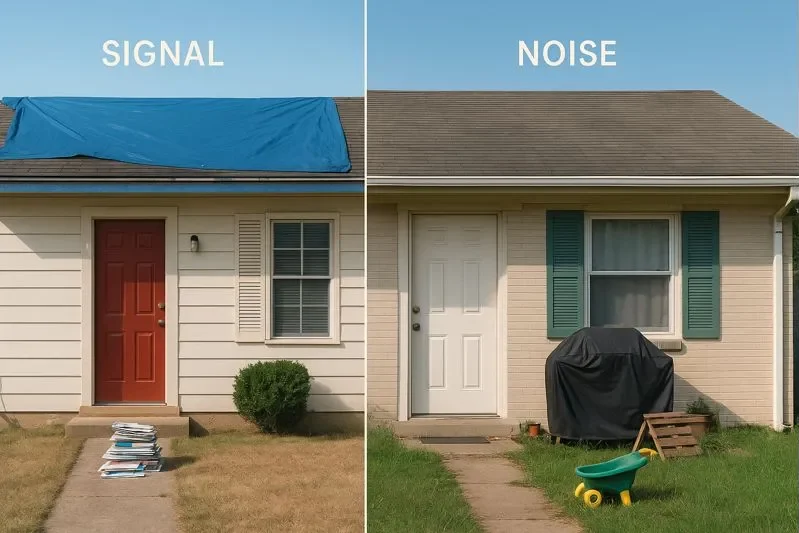
Driving for dollars works when you’re looking for patterns, not perfection. Distress shows up as deferred decisions. Neglect is random. Distress is consistent.
You’re not just looking for overgrown grass or peeling paint. You’re looking for properties where small problems stack up over time. Mail piling up, the same tarp on the roof month after month, utilities clearly off. Those details tell you the owner isn’t actively managing the property.
Consistency beats volume here. Driving the same areas regularly trains your eye. You start to notice what changed, not just what looks bad. That’s where real leads come from.
The follow-up is where most people drop the ball. One letter or one knock isn’t enough. Quiet persistence, spaced out over time, is how you get responses before other investors even realize the property exists.
Direct-to-Seller Outreach
Mail, cold calling, and texting all work, and none of them work if your message is generic. The method gets you attention. The message earns a response.
Most outreach fails because it sounds like everyone else. Sellers don’t respond to formats, they respond to relevance. If your message doesn’t acknowledge their situation or give them a reason to trust you, it blends into the noise.
Standing out isn’t about being clever. It’s about being clear. Simple language, no pressure, and a reason for reaching out that feels human instead of transactional.
When sellers feel understood instead of targeted, conversations start earlier and last longer. That’s where leverage builds.
Probate, Pre-Foreclosure, and Tax Distress
These categories reward patience because urgency builds slowly. The mistake most investors make is showing up too late, when timelines are tight and options are limited.
Probate takes time. Families need space before they make decisions. Investors who rush get ignored. Investors who stay present get calls.
Pre-foreclosures are similar. The real opportunity is before the notice feels final. Once deadlines loom, sellers default to the fastest option, not the best one.
Tax distress works the same way. Early outreach gives you room to structure solutions. Late outreach forces you to compete.
The leverage here isn’t price. It’s timing and trust.
Finding “Hidden” Deals on the MLS
The MLS isn’t dead. It’s just misunderstood. Most people assume that if a property is listed publicly, any real opportunity has already been squeezed out. In practice, deals still exist on-market because not every listing is marketed, positioned, or priced correctly from the start.
The MLS is a distribution system, not a quality filter. It shows you everything, including mistakes. Those mistakes are where opportunities hide.
Deals still show up on-market because sellers are human. They overprice. They test the market. They hire the wrong agent. They rush listings live before they’re ready. When expectations collide with reality, leverage quietly shifts to buyers who are paying attention.
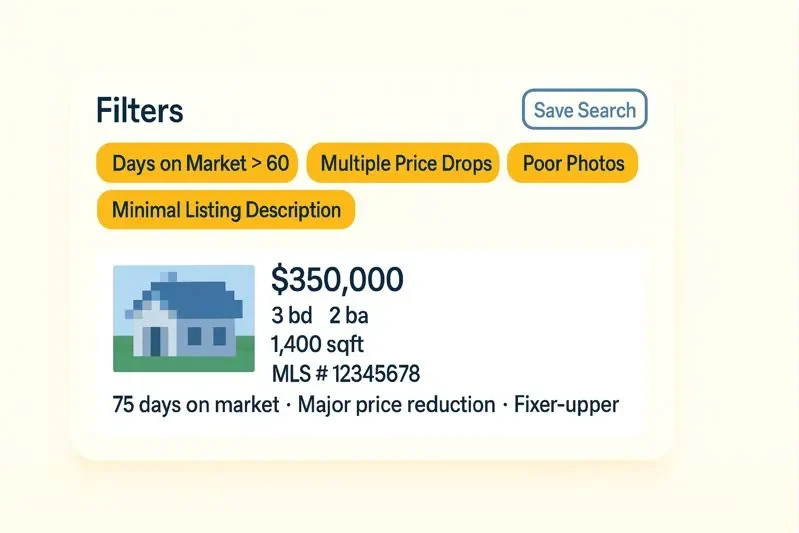
The problem is most investors use the MLS like a browsing tool instead of an analysis tool. They scroll. They skim. They wait for something to jump out. The advantage comes from using filters that surface friction, not beauty.
Most investors never look past basic criteria like price and bedrooms. The real signals sit elsewhere. Days on market, listing history, price change frequency, and remarks language all tell a story. When you stack those filters together, patterns emerge fast.
Certain signals deserve extra attention.
Long days on market usually mean resistance. Either the seller is stubborn, the price is wrong, or something about the property isn’t translating. Over time, that resistance turns into motivation.
Repeated price drops signal recalibration. Each drop is an admission that the original plan didn’t work. Sellers become more flexible after the second or third adjustment, not the first.
Poor photos and weak descriptions are often overlooked advantages. They limit showings, reduce emotional pull, and keep retail buyers away. That lack of competition creates space for buyers who can see past presentation.
Moving faster than retail buyers doesn’t mean being reckless. It means having criteria defined, financing lined up, and decision-making compressed. When you already know your numbers, speed becomes calm instead of frantic.
How to Tell If It’s a Deal in 10 Minutes or Less
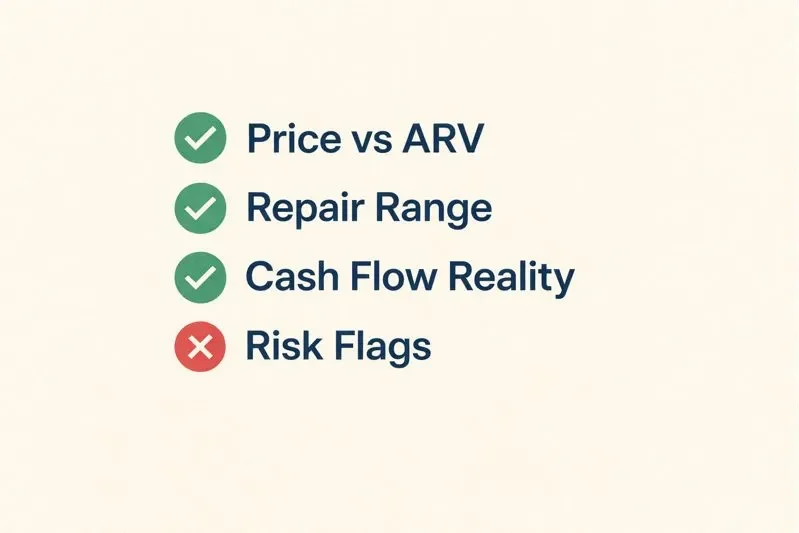
You don’t need a full spreadsheet to know whether a deal is worth your time. Most properties can be ruled out quickly if you know what to look for. The goal of a fast evaluation isn’t precision. It’s elimination.
If you’re serious about how to find real estate deals without burning out, learning to say no quickly is just as important as finding yeses.
The only numbers that matter at this stage are purchase price, realistic after-repair value, rough renovation cost, and expected rent or exit price. Everything else can wait. If those four don’t line up within a few minutes, the deal won’t improve with more analysis.
Start with a quick equity spread check. Look at recent, comparable sales that actually closed, not active listings. Subtract your purchase price and estimated repairs from that number. If there isn’t a meaningful gap, you’re relying on appreciation or perfect execution. Neither is a strategy.
Next is the cash flow reality check. Ignore optimistic rent estimates and use conservative numbers. Account for taxes, insurance, maintenance, and vacancy. If the property only works on paper with zero margin, it doesn’t work at all.
Renovation risk is where most deals quietly die. Watch for foundation issues, major systems nearing end of life, and anything that requires permits in slow jurisdictions. Cosmetic fixes are manageable. Structural surprises are not.
Knowing when to walk away is the final skill. If the seller isn’t motivated, the numbers are thin, or the risks stack up, exit early. Walking away fast keeps your capital, time, and focus available for the right opportunity.
Tools and Systems Investors Use to Stay Early
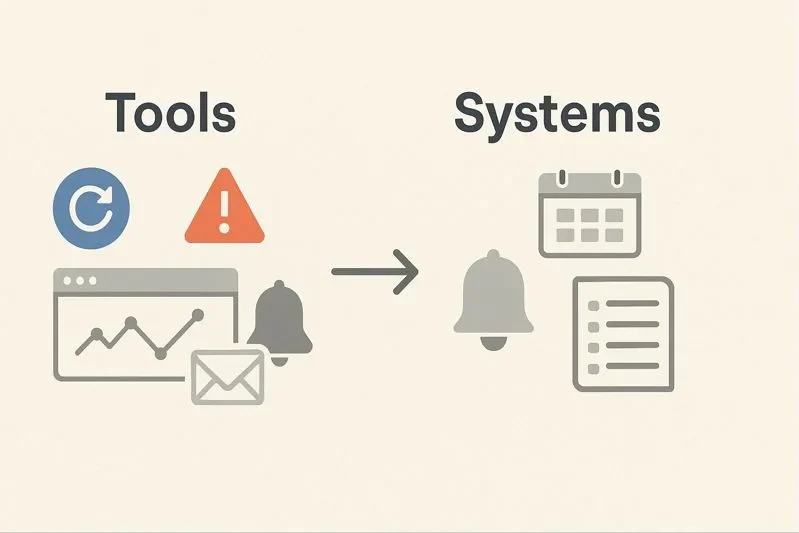
Tools don’t find deals. Systems do. Tools just make systems easier to run. The investors who stay early understand this distinction and build around it instead of chasing the newest platform.
Deal-finding platforms exist because public sites show information too late. By the time something is visible everywhere, leverage has already compressed. Paid platforms aggregate data earlier, layer filters, and surface properties before they feel obvious. That alone can create an edge, but only if you know what you’re looking for.
Public sites are still useful, but mostly for validation. They confirm pricing, comps, and market behavior. Platforms are for discovery. Public sites are for confirmation. Mixing those roles usually leads to wasted time.
What trips people up is assuming tools replace thinking. They don’t. A dashboard can surface leads, but it can’t interpret motivation. A filter can narrow results, but it can’t tell you which seller is emotionally done. That judgment only comes from pattern recognition, not software.
Staying early requires a simple tracking system. Not a CRM with twenty fields. Just a way to log properties, note why they caught your attention, and schedule follow-ups before urgency spikes. Most deals don’t happen on the first contact. They happen after quiet persistence.
Professionals don’t chase deals one by one. They build deal flow. They spend their time upstream, where leads are cold and competition is low. When opportunities warm up, they already know the backstory. That familiarity is what turns speed into confidence instead of pressure.
How to Find Deals in Competitive or “No Deal” Markets

There is no such thing as a market with no deals. There are only markets where expectations haven’t adjusted yet. When people say deals are gone, what they usually mean is that the old shortcuts stopped working.
Market conditions don’t kill deals. Behavior does.
When prices rise quickly or rates change, sellers anchor to outdated numbers. Buyers hesitate. Activity slows. That gap creates friction, and friction is where opportunity lives. Investors who understand this stop fighting the market and start observing it.
Rising rates are a good example. Higher payments reduce the buyer pool, especially on marginal properties. That doesn’t lower every price overnight, but it does change who can act. Sellers with flexibility hold out. Sellers without it start making concessions quietly. Terms become negotiable before price does.
The first cracks usually appear where carrying costs hurt. Properties that don’t cash flow, vacant homes, inherited properties, and rentals with aging systems all feel pressure faster when financing tightens. These sellers aren’t watching headlines. They’re watching their expenses.
Patience becomes a competitive advantage in these environments. Most investors either rush or retreat. Few stay steady. By tracking the same properties over time, following up without pressure, and letting motivation mature, you position yourself to act when others are fatigued.
In slow markets, time does the negotiating for you.
Common Myths That Keep People Late
Most people aren’t late because they lack information. They’re late because they believe things that quietly put them behind. These myths sound reasonable on the surface, which is why they’re so effective at keeping people stuck.
One of the most common is the idea that you need connections. Connections help, but they are not a prerequisite. Most strong relationships in real estate are built after someone proves they can execute, not before. Waiting until you feel “connected enough” is usually just another way to delay taking action.
Another belief is that wholesalers get everything first. In reality, wholesalers are just one distribution point. They control deals they personally find, not the market. Many of their best opportunities come from the same public signals everyone else can see. The difference is follow-up and speed, not access.
Then there’s the claim that there are no deals anymore. This usually comes from people measuring opportunity against a past market. Deals didn’t disappear. The definition changed. What worked when money was cheap doesn’t translate cleanly now, and that adjustment period creates confusion.
The final trap is confusing volume with clarity. “I need more leads” sounds productive, but it often means “I don’t know what I’m looking for.” Better filters beat more inputs every time. When your criteria are sharp, fewer leads produce better outcomes.
Once these myths fall apart, timing improves naturally.
Your First 30-Day Deal-Finding Plan
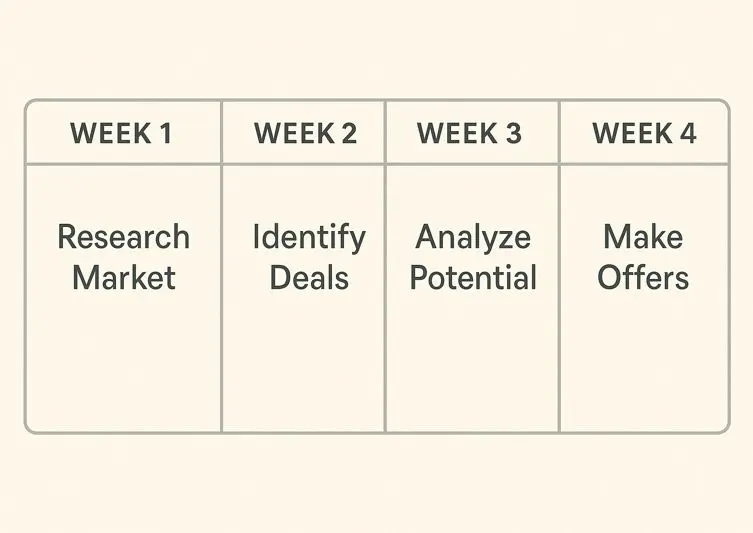
Finding deals isn’t about doing everything at once. It’s about sequencing the right actions so momentum builds instead of stalling. A focused 30-day plan creates structure, removes overwhelm, and turns theory into movement.
The goal of this month is not to buy a property. It’s to build the foundation that allows deals to show up predictably.
Week 1: Market + Criteria Clarity
The first week is about defining what a deal actually looks like for you. Without this, every property feels “interesting” and nothing gets acted on.
Start by narrowing your market to a specific area you can realistically learn. Pull recent sold data and get familiar with prices, days on market, and property types that actually move. You’re not memorizing numbers. You’re building intuition.
At the same time, define your criteria. Price range, property type, minimum equity spread, and acceptable risk level. Be honest about your capital, your time, and your tolerance for renovation surprises.
Clarity here prevents wasted effort later. When your criteria are clear, decisions get faster.
Week 2: One Off-Market Channel
Pick one off-market channel and commit to it. Not three. Not five. One.
This could be driving for dollars, probate outreach, or another channel that fits your schedule and comfort level. The goal is consistency, not perfection. You’re building reps, not chasing immediate results.
Track what you do and what you notice. Which properties stand out. Which owners respond. Which messages feel natural to send.
This week teaches you more about seller behavior than any article ever could.
Week 3: MLS System Setup
Now you build your on-market system. Set up saved searches that surface friction, not pretty listings. Focus on days on market, price changes, and language in remarks.
Have your financing lined up and your decision process defined. Speed here comes from preparation, not urgency.
You want the MLS working quietly in the background while you focus elsewhere.
Week 4: Follow-Up and Deal Review
This is where everything connects. Follow up with leads from weeks two and three. Revisit properties. Recheck numbers.
Most opportunities don’t appear instantly. They reveal themselves through repetition. Reviewing what you’ve seen sharpens your filters and shows you where to double down next month.
Progress comes from staying in motion with intention.
Being Early Is a Skill, Not Luck
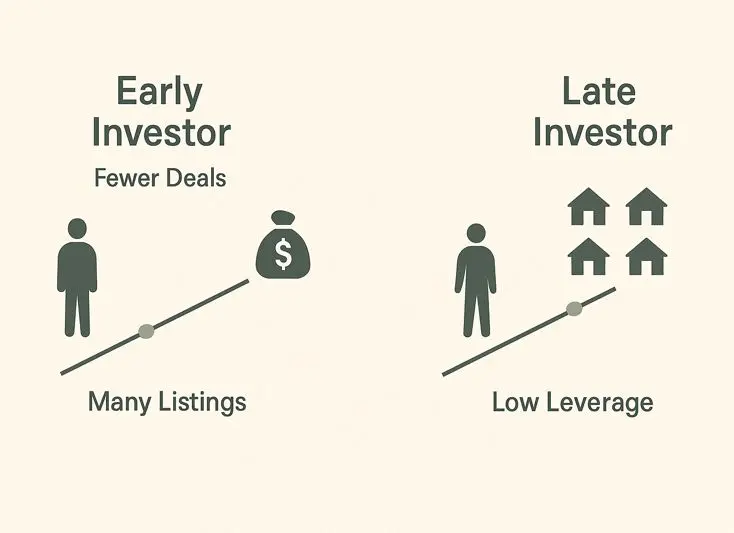
Finding good deals isn’t about stumbling into the right property at the right time. It’s about learning how opportunities form and positioning yourself accordingly. Deal-finding is learned, not discovered. The people who do it well didn’t get lucky. They got deliberate.
Over time, systems outperform hustle. Hustle burns energy and creates inconsistency. Systems compound. They keep working when motivation dips, when the market shifts, and when results take longer than expected. That’s why experienced investors look calm while others feel frantic. They aren’t reacting. They’re operating inside a structure they trust.
The real separator between consistent investors and frustrated ones isn’t intelligence, capital, or connections. It’s patience paired with process. Consistent investors stay close to the source of opportunity, follow up when others forget, and let time do some of the heavy lifting.
Once you stop chasing deals and start building ways for deals to find you, the entire process changes. Being early stops feeling stressful and starts feeling normal.