Why This Term Confuses So Many Buyers and Sellers
If you have spent any amount of time scrolling listings, you have probably seen it happen. A house you liked. Maybe one you bookmarked. Suddenly the status changes, and now it says under contract. That moment alone sends a lot of people straight to Google asking what does under contract mean in real estate and whether they just missed their chance.
That confusion is completely understandable. Real estate uses a lot of terms that sound definitive but actually are not. Under contract is one of the most misunderstood ones, especially for buyers who are already overwhelmed trying to interpret listing statuses, market signals, and deal flow. This is the same reason many new investors struggle early on, because understanding where a deal truly stands is just as important as knowing how to find opportunities in the first place. Tools matter, but context matters just as much. That is why experienced investors rely on real estate investing tools to track listings, monitor status changes, and avoid misreading what the market is telling them.
Here is the key clarification right up front. Under contract does not mean the home is sold. It means a deal is in motion, not finished. Ownership has not changed, money has not exchanged hands, and there are still several ways the transaction can fall apart.
This article exists to remove that uncertainty. No legal jargon. No agent speak. Just a plain English breakdown of what under contract actually means and what it means for you depending on whether you are buying or selling.
The Moment a Listing Switches to Under Contract
Most people search this term because something triggered it emotionally. You were watching a listing and the status flipped overnight. Or you are selling and your agent just told you the home is officially under contract, but nothing feels done yet.
That moment creates a disconnect. The label sounds final, but the situation does not feel final. That gap is where confusion lives, and it is also where bad assumptions get made.
Understanding what this status actually represents helps you avoid reacting too early or making the wrong next move.
Why Under Contract Feels More Final Than It Really Is
The phrase under contract sounds like the deal is locked in stone. In reality, it simply means both parties agreed to terms and signed a contract that still has conditions attached to it.
Inspections, appraisals, financing approval, and timelines all sit between under contract and closing. Any one of those can derail the deal.
Once you understand that, the status starts to make more sense and becomes less intimidating.
What This Article Will Help You Understand
By the end of this article, you will know exactly what under contract means in real world terms. You will understand how it affects buyers, how it affects sellers, and when it actually matters to take action.
More importantly, you will know what not to assume when you see it.
What Does “Under Contract” Mean in Real Estate?

Under contract means the buyer and seller have signed a legally binding purchase agreement, but the sale is not finished yet. The home is no longer actively marketed, but ownership has not changed and the transaction is still in progress.
This is the phase where most of the work actually happens. Inspections, financing, appraisals, and paperwork all occur after a home goes under contract, not before. That is why this status causes so much confusion for people watching from the outside.
Understanding this distinction matters because under contract is a milestone, not a finish line.
Simple Definition (No Jargon)
At its core, under contract means both sides agreed to the deal on paper. The buyer submitted an offer, the seller accepted it, and both parties signed the contract.
That does not mean the home is sold. No keys have been handed over, no deed has transferred, and no money has officially changed hands yet.
The deal is now moving through a checklist of required steps before closing. Until those steps are completed, the transaction can still change or fall apart.
The takeaway here is simple. A signed contract starts the process, it does not complete it.
What “Under Contract” Actually Signals
When a home goes under contract, it signals that the price and basic terms are locked in. Both sides agreed on the purchase price, timelines, and major conditions outlined in the contract.
It also signals that the buyer is working through contingencies. This usually includes inspections, securing financing, and confirming the home appraises at or above the agreed price.
From the seller’s side, it means they accepted an offer but have not been paid yet. Until closing happens, the seller still owns the home and still carries the risk if the deal fails.
This stage is best thought of as conditional commitment. Everyone intends to close, but nothing is guaranteed yet.
Is a House Under Contract the Same as Sold?
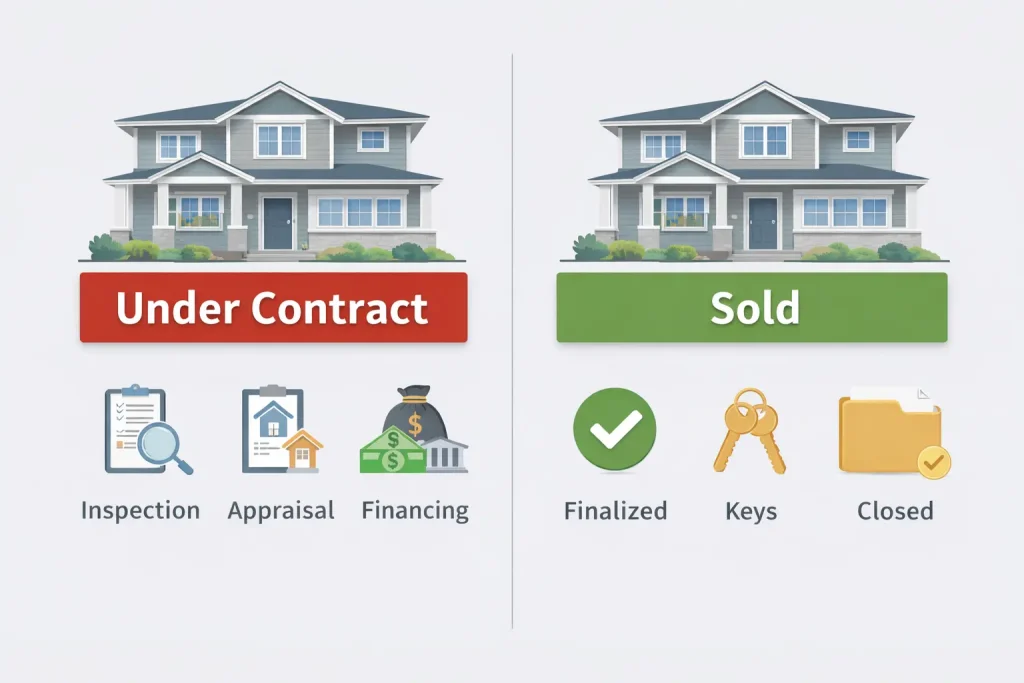
No, a house under contract is not the same as sold. Under contract means the deal is in progress. Sold means the transaction is complete and ownership has officially transferred.
This distinction sounds small, but it has real consequences for buyers, sellers, and anyone trying to plan their next move. Confusing the two often leads to bad assumptions and poor timing decisions.
Once you understand where under contract actually sits in the process, a lot of the uncertainty goes away.
Under Contract vs Sold
Under contract means the buyer and seller have agreed to terms and signed a contract, but the deal is still moving through required steps. Inspections, financing, appraisal, and closing paperwork are all still ahead.
Sold means all of that is done. The deed has transferred, the seller has been paid, and the buyer now owns the home.
Think of under contract as a handshake with conditions attached. Sold is the finish line.
Why This Distinction Matters
Legal ownership has not changed when a home is under contract. The seller still owns the property, carries the insurance, and is responsible for it until closing.
Deals can still fall apart during this phase. Inspections uncover issues. Appraisals come in low. Financing falls through. This is why you sometimes see homes go back on the market after being under contract.
Timing expectations also differ. Buyers may assume the home is gone forever. Sellers may mentally move on too early. In reality, nothing is final until the sale is recorded.
Understanding this difference helps you stay grounded. Under contract means close, not complete.
Can You Still Make an Offer on a House Under Contract?
Sometimes, yes. You can still make an offer on a house under contract, but whether it goes anywhere depends on the strength of the existing deal and the seller’s willingness to entertain backups.
This is one of the most misunderstood parts of the process. Many buyers assume under contract means off limits. In reality, there are situations where a backup offer makes sense and situations where it is a waste of time.
Knowing the difference helps you decide when to stay engaged and when to move on.
Short Answer
Yes, you can sometimes make an offer on a house under contract. Not always, and not automatically, but it is possible.
A backup offer only becomes relevant if the current deal falls apart. The seller does not want to restart the process if they already have another buyer lined up.
The key question is not whether you can submit an offer, but whether the seller has a reason to consider it.
When a Backup Offer Is Possible
A backup offer is more likely when the seller allows them in the first place. Some sellers instruct their agent to keep taking offers until the deal is fully closed.
It is also more realistic when the existing contract has weak contingencies. Long inspection periods, financing contingencies, or appraisal uncertainty all increase the chance of a deal failing.
Financing risk matters too. If the buyer is relying on a loan and the numbers are tight, sellers often like having a second option waiting in the wings.
In these cases, a clean backup offer can be attractive.
When It’s Not Worth Pursuing
If the buyer is paying cash, the odds of the deal falling apart drop significantly. Cash deals remove financing and appraisal risk almost entirely.
The same applies when there are no contingencies. A contract with no inspection or financing conditions is hard to beat.
Timing also matters. If the deal is late in the contract timeline and close to closing, submitting a backup offer is usually pointless.
At that point, your energy is better spent finding the next opportunity rather than hoping for a collapse.
What Happens After a Home Goes Under Contract?
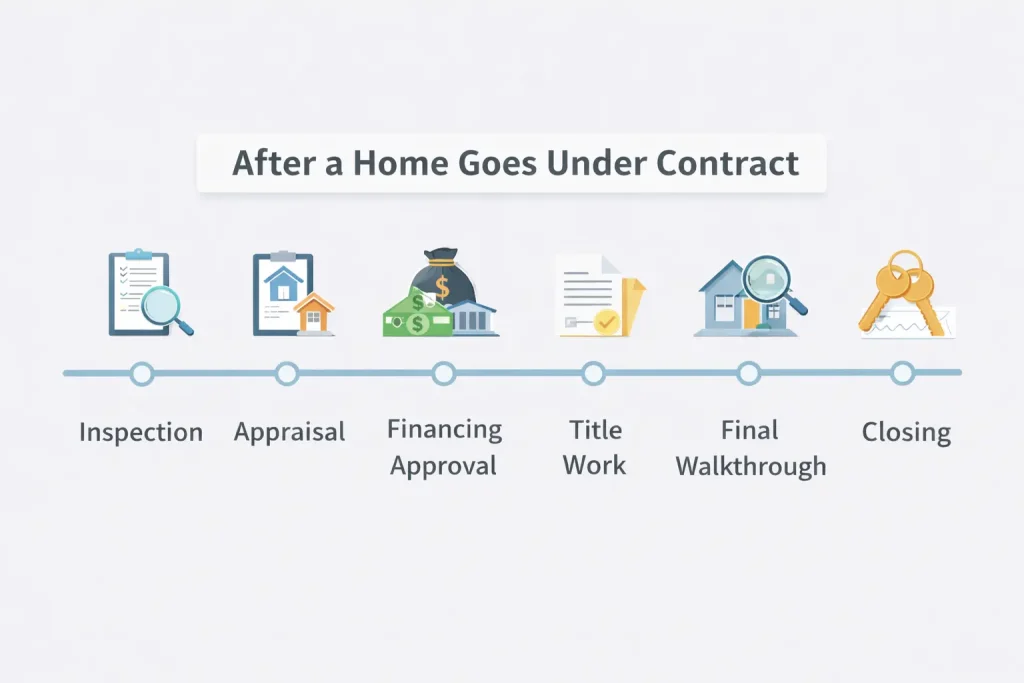
Once a home goes under contract, the transaction shifts from negotiation mode to execution mode. This is where timelines matter, deadlines appear, and most deals either solidify or fall apart.
From the outside, it can feel quiet. Behind the scenes, it is usually the busiest part of the entire process.
Understanding what actually happens next helps you set realistic expectations and avoid unnecessary stress.
Typical Steps After Contract Acceptance
The first major step is the home inspection. The buyer hires an inspector to evaluate the condition of the property and identify any issues that were not obvious during showings. This often leads to renegotiations or repair requests.
Next comes the appraisal. If the buyer is using financing, the lender orders an appraisal to confirm the home is worth at least the purchase price. A low appraisal can delay the deal or force price adjustments.
Financing approval runs in parallel. The lender verifies income, assets, credit, and documentation. This is where buyers sometimes get tripped up if something unexpected shows up during underwriting.
Title work happens in the background. The title company or attorney confirms ownership, checks for liens, and prepares closing documents. This step is critical but often overlooked.
Before closing, the buyer completes a final walkthrough to confirm the home is in agreed condition. Closing is the final step where documents are signed and ownership officially transfers.
Each step builds on the last. Miss one, and the whole timeline shifts.
How Long Homes Usually Stay Under Contract
Most homes stay under contract for about 30 to 45 days. This is the typical window needed to complete inspections, secure financing, clear title, and coordinate closing.
Delays happen when inspections uncover major issues, appraisals come in low, or lenders request additional documentation. Holidays, busy markets, and scheduling conflicts can also stretch timelines.
Extensions are common and not always a red flag. What matters is whether the underlying issues are solvable.
The key takeaway is this. Under contract does not mean immediate. It means the clock has started, not that the finish line is guaranteed.
What Contingencies Are Usually Involved?
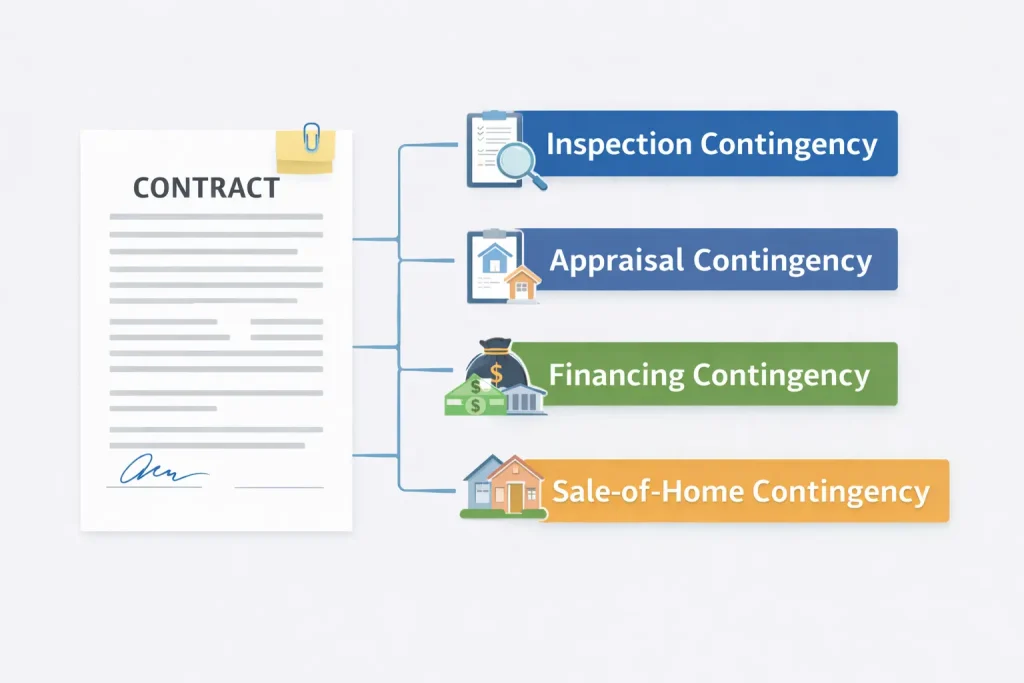
Contingencies are conditions written into the contract that must be satisfied for the deal to move forward. They protect the buyer and, indirectly, the seller by outlining exactly when and how either party can walk away.
This is the part of the transaction that creates most of the uncertainty around homes under contract. It is also the reason deals sometimes fall apart after everyone thought they were locked in.
Understanding contingencies explains almost everything that happens between under contract and closing.
Common Contingencies Explained
The inspection contingency allows the buyer to inspect the home and negotiate repairs or credits based on what is found. If major issues come up and no agreement is reached, the buyer can usually walk away.
The appraisal contingency protects the buyer and the lender. If the home appraises for less than the purchase price, the buyer can renegotiate or exit the deal without penalty.
The financing contingency gives the buyer time to secure final loan approval. If financing falls through despite good faith effort, this contingency allows the buyer to cancel.
The sale of current home contingency ties the purchase to the buyer successfully selling their existing property. This one introduces more risk and is often less attractive to sellers in competitive markets.
Each contingency adds a layer of protection, but also a layer of uncertainty.
Why Contingencies Matter So Much
Contingencies are exit points. They define the specific scenarios where a buyer can legally back out of the deal.
This is why homes sometimes fall back on the market after being under contract. An inspection reveals issues. An appraisal comes in low. Financing does not clear underwriting.
From the outside, it can look random. In reality, it is usually a contingency doing exactly what it was designed to do.
Once contingencies are removed or satisfied, the deal becomes far more stable. Until then, under contract always comes with an asterisk.
Why Do Some Homes Go Back on the Market After Being Under Contract?

Homes go back on the market because the deal failed somewhere between contract and closing. Even when both sides intend to move forward, real estate transactions involve enough variables that not all of them make it to the finish line.
This is frustrating for sellers and confusing for buyers watching from the sidelines. It also explains why under contract never means guaranteed.
Once you understand the most common failure points, the pattern becomes predictable.
Most Common Reasons Deals Fall Through
Failed inspections are one of the biggest reasons contracts collapse. Serious issues like structural problems, roof damage, or major systems needing replacement can kill a deal if the parties cannot agree on repairs or credits.
Low appraisals are another common trigger. If the home does not appraise at the contract price, the lender will not fund the full amount. When neither side is willing or able to bridge the gap, the deal ends.
Buyer financing issues also show up late in the process. Changes in employment, debt, or credit can cause loan denials even after pre approval.
Sometimes buyers simply get cold feet. The financial and emotional weight of buying a home causes some people to walk away even when nothing is technically wrong.
Timeline disagreements matter too. Missed deadlines, delayed repairs, or slow responses can push a deal past what one party is willing to tolerate.
Each of these issues ties back to contingencies and timing.
What This Means for Buyers Watching From the Sidelines
For buyers, homes coming back on the market create opportunity windows. These listings often face less competition the second time around.
If a home relists, act quickly. Have your financing ready, understand why the previous deal fell apart, and submit a clean offer with fewer contingencies if possible.
The takeaway is simple. A relisted home is not always a problem property. Often, it is just a deal that could not survive the process.
Under Contract vs Pending vs Contingent
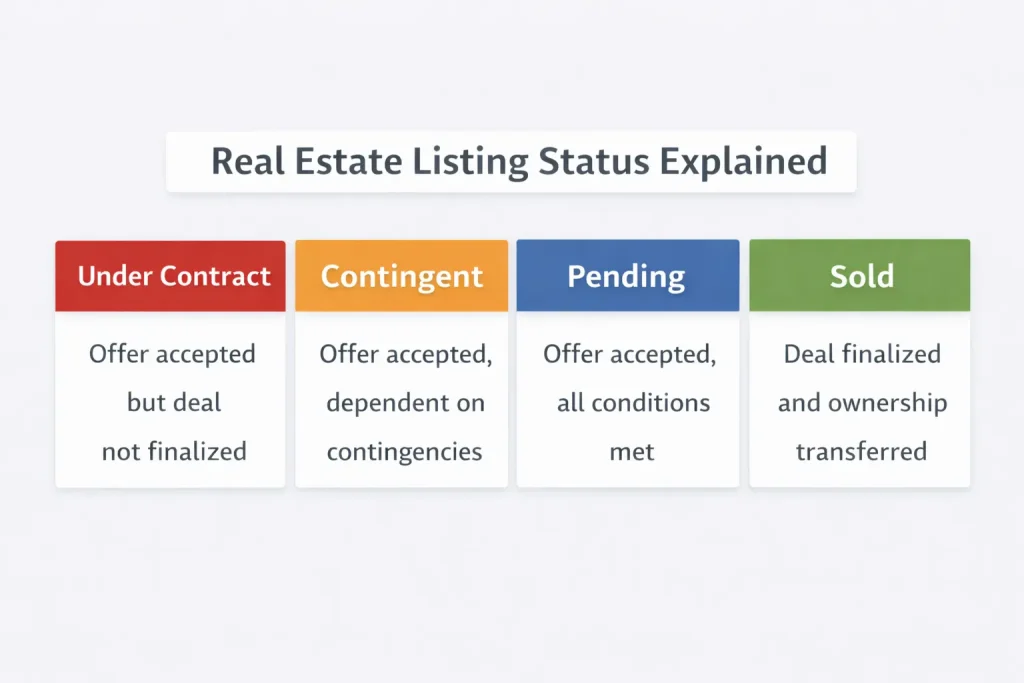
These three labels are often used interchangeably, which is exactly why they confuse people. They all describe a home that is no longer actively for sale, but they do not mean the same thing and they do not signal the same level of deal certainty.
Understanding the differences helps you interpret listings correctly instead of guessing what stage a deal is actually in.
Status Comparison Breakdown
Under contract is the broadest term. It means the buyer and seller have signed an agreement, but contingencies may still be in place. The deal is active, but unresolved conditions still exist.
Contingent usually means the contract includes one or more major conditions that must be satisfied before the deal can move forward. This often refers to inspections, appraisals, or the buyer selling another home. There is still meaningful risk at this stage.
Pending generally indicates that contingencies have been satisfied or removed. The deal is further along and much closer to closing. While not impossible, deals falling apart at this stage are less common.
Sold means the transaction is complete. The deed has transferred, funds have been disbursed, and the home officially belongs to the buyer.
Each label represents a different point on the same timeline, not a different type of transaction.
Why These Terms Are Often Used Inconsistently
MLS rules vary by region. Some systems use under contract as a catch all status, while others break things down more precisely.
Real estate platforms also label differently. Zillow, Redfin, and Realtor often translate MLS data into simplified terms, which can blur distinctions.
Agent discretion plays a role as well. Some agents update statuses immediately. Others wait until certain milestones are reached.
The key takeaway is this. Do not read too much into the exact label without context. Ask what contingencies remain and how far along the deal actually is.
What “Under Contract” Means for Buyers
For buyers, under contract does not automatically mean move on. It means pause, pay attention, and decide whether the listing is still worth tracking.
The right response depends on how strong the existing deal is and how badly you want the property. Understanding that distinction helps you avoid wasting time or missing an opportunity.
Should You Move On or Stay Alert?
If the deal looks strong, meaning cash buyer, no contingencies, or close to closing, it is usually best to move on. The odds of it coming back are low.
If the contract includes multiple contingencies or the home just went under contract, staying alert makes sense. These are the deals most likely to fall apart.
The goal is not to hope for failure. It is to be realistic about probabilities.
When to Ask Your Agent Questions
This is the point where a good agent adds value. Ask what contingencies are in place, how long the inspection and financing periods are, and whether the seller is accepting backup offers.
You can also ask why the seller chose the current buyer. That context often tells you how confident the seller feels about the deal.
Clear questions lead to clear expectations.
How to Prepare if the Deal Falls Through
If you are serious about the property, get your financing ready and review the listing details closely. Know what price and terms you would offer without hesitation.
When a deal falls apart, things move fast. Being prepared allows you to act instead of scrambling.
The takeaway for buyers is simple. Under contract is not a dead end. It is a decision point.
What “Under Contract” Means for Sellers
For sellers, under contract is a step forward, not the finish line. It is the point where you have a committed buyer on paper, but the deal still needs to survive the process.
This phase requires attention, patience, and realistic expectations. How you handle it can determine whether the transaction closes smoothly or falls apart.
What You Should Be Doing During This Phase
Stay engaged and responsive. Inspection requests, repair negotiations, and paperwork move quickly, and delays can create unnecessary friction.
Keep the home in showing condition until contingencies are removed if backup offers are allowed. This gives you leverage if the deal starts to wobble.
Most importantly, follow the contract. Deadlines matter, and missing one can weaken your position or create an opening for the buyer to exit.
Risk Points to Watch
Inspections are the first major risk point. Unexpected issues or aggressive repair demands can derail momentum.
The appraisal is another critical moment. A low appraisal shifts leverage and can force renegotiation.
Financing approval is the quiet risk. Problems often surface late, so staying in communication with your agent helps catch issues early.
Each of these points is normal. None automatically mean the deal is failing.
How Confident You Should Feel at Each Stage
Early in the contract, confidence should be cautious. Too many variables still exist.
Once inspections are resolved and the appraisal clears, confidence increases significantly. Most deals that reach this stage close.
After contingencies are removed, you can feel reasonably confident, but final certainty only comes at closing.
The key takeaway for sellers is this. Treat under contract as progress, not closure, until the keys change hands.
Frequently Asked Questions About Under Contract Homes
This is where most of the anxiety shows up. Once a home is under contract, people want to know what can still go wrong and who still has leverage.
These questions come up constantly because the answers are not intuitive, and assumptions here can cost real money.
In most cases, a seller cannot simply back out without consequences. Once a contract is signed, both parties are legally bound by its terms.
That said, sellers can exit the deal if the buyer breaches the contract. Missing deadlines, failing to deposit earnest money, or not meeting contingency requirements can give the seller a legal out.
Outside of that, backing out usually exposes the seller to penalties or legal action. This is why sellers should be confident before accepting an offer.
Yes, buyers can often cancel, but only under specific conditions. Those conditions are spelled out in the contingencies written into the contract.
Inspection, appraisal, and financing contingencies are the most common exit points. If the buyer follows the rules and timelines tied to those contingencies, they can usually walk away without losing earnest money.
Once contingencies are removed, canceling becomes much harder and more expensive.
No, the price is not always final when a home goes under contract. The agreed price is the starting point, not a guarantee.
Inspections can lead to renegotiations. Low appraisals can force price reductions or credits. Financing limits can change what the buyer can afford.
Price changes after going under contract are common and usually tied to new information uncovered during the process.
A noticeable percentage of deals never make it to closing. The exact number varies by market and conditions, but failures are common enough that no one should assume a deal is guaranteed.
Most failures happen early, during inspections or appraisal. Deals that make it past those stages are far more likely to close.
The takeaway is simple. Under contract means intent, not certainty. Until closing happens, every deal carries some level of risk.
What “Under Contract” Really Means

At the simplest level, under contract means progress, not completion. It is a meaningful step forward, but it still comes with conditions and risk on both sides.
Here is what to remember.
• Under contract means a buyer and seller signed an agreement, but the sale is not finished
• The home is not sold yet, but it is no longer freely available to the market
• Inspections, financing, appraisal, and timing still determine whether the deal closes
• Many deals fail before closing, especially early in the process
For buyers, this status is a signal to stay informed and ready. Ask questions, understand the risks in the existing deal, and be prepared to move quickly if the home comes back on the market.
For sellers, under contract is the phase where attention matters most. Stay proactive, meet deadlines, and treat the deal as fragile until closing is complete.
The real takeaway is this. Under contract is not the end of the story. It is the middle.