


Why Pros Pay for Software and Beginners Don’t

Most failed deals are not bad ideas. They are bad assumptions that never got challenged. That is the real role of real estate investing software, to expose weak assumptions before they turn into expensive mistakes.
Free tools work for a while. They work when timelines stay tight, rehab budgets behave, and rents land exactly where you penciled them. The moment reality shifts, cracks start to show. A contractor runs late. Materials cost more than expected. Insurance renews higher than modeled. Rents come in softer than projected. What looked fine on paper quietly stops working.
This is why experienced investors build systems around tools instead of relying on gut feel or one off spreadsheets. If you look at the broader ecosystem of real estate investing tools pros use to find deals, the pattern is the same. Tools exist to reduce friction early and reduce risk later. Software lives firmly in that second category. It is not about finding deals faster. It is about pressure testing assumptions once opportunity turns into exposure.
That distinction is where beginners and pros separate. Beginners use tools to confirm a deal works in a clean scenario. Pros use tools to see how a deal behaves when things go wrong. They want to know how much margin actually exists and how fast that margin disappears when assumptions slip.
Experienced investors do not pay for software because it is convenient. They pay because it reduces risk. Good tools force you to account for holding costs, downside scenarios, and sensitivity to small changes that compound over time. They surface problems early, when the cost of fixing them is still zero.
It is also worth setting expectations upfront. This is not a sponsored list or a generic roundup of the best real estate investor software. The platforms discussed later are tools experienced investors willingly pay for because they solve real and expensive problems that free calculators tend to ignore.
Who This Article Is (and Isn’t) For
This article is written for a very specific type of investor, and that is intentional. If you are actively making decisions with real money on the line, the ideas below will feel familiar rather than theoretical. The goal here is clarity, not mass appeal.
If you are early in your journey but already thinking in terms of systems, assumptions, and downside risk, this article will help you orient faster. If not, it may feel overly practical, which is kind of the point.
This Is for You If You’re Actively Analyzing Deals
This is for you if you look at deals weekly, not occasionally when something interesting pops up online. You are already past asking whether real estate investing works and are focused on whether a specific deal works under real conditions.
You want to underwrite consistently and compare opportunities using the same framework every time. That mindset naturally leads to better decisions and fewer surprises. Software becomes useful at this stage because repetition exposes where assumptions tend to break.
This Is for You If Cash Flow and Downside Risk Matter
This is also for you if cash flow actually matters beyond the first few months. You care about holding costs, insurance increases, tax reassessments, and what happens when timelines stretch longer than planned.
You think in base cases and downside scenarios, not best case outcomes. That perspective usually comes from experience or from watching other investors learn expensive lessons. Tools that surface risk early tend to pay for themselves quickly at this stage.
This Is for You If You Want Repeatable Systems
If your goal is to build repeatable systems rather than rely on gut feel, you are in the right place. You want your decision making to be boring, consistent, and scalable.
Repeatable underwriting removes emotion from the process. It also makes it easier to say no, which is one of the most underrated skills in real estate investing.
This Isn’t for You If You’re Looking for Shortcuts
This article is not for you if you are casually browsing Zillow with no intention of running real numbers. It is also not for anyone looking for a push button investing shortcut that removes the need to think.
If you actively avoid numbers or hope appreciation will fix weak deals, the tools discussed later will feel unnecessary or even uncomfortable. Real estate rewards discipline, not avoidance.
The 5 Problems Real Estate Investing Software Actually Solves
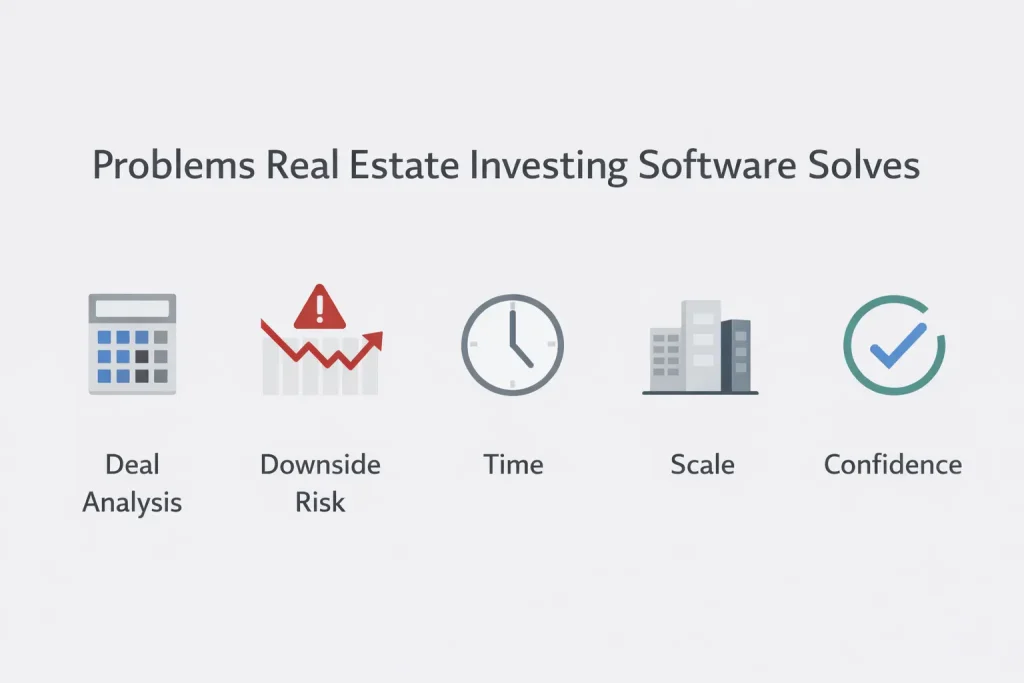
Real estate investing software exists to solve a small set of very specific problems. It is not about features or dashboards. It is about removing friction, reducing blind spots, and making decisions cleaner as volume increases. Every tool discussed later ties back to one or more of these problems.
Faster, Cleaner Deal Analysis
The first problem software solves is speed without sloppiness. When you analyze deals regularly, manual underwriting becomes a bottleneck. Numbers get copied incorrectly. Assumptions drift. One formula breaks and everything downstream looks fine until it is not.
Software creates consistent underwriting. The same inputs flow through the same logic every time, which makes errors easier to spot and results easier to trust. It also makes comparisons across deals far simpler. When every property is analyzed the same way, patterns start to emerge quickly.
The takeaway is simple. Faster analysis is only useful when it stays clean.
Cash Flow and Downside Visibility
The second problem is visibility into what happens when things do not go as planned. Most bad deals do not fail immediately. They bleed slowly because downside scenarios were never modeled.
Good real estate investing software separates base case assumptions from worst case outcomes. It shows break even timelines and how sensitive a deal is to changes in rent, interest rates, and holding periods. That visibility forces realism early, before optimism hardens into commitment.
If you care about protecting capital, this is where software earns its keep.
Time Compression Without Cutting Corners
Another problem software solves is time compression. Investors who scale successfully are not doing more math. They are doing less repetitive work.
Screening more deals faster allows you to focus energy where it matters. Negotiating better terms. Structuring smarter offers. Walking away sooner when numbers do not hold up. Software shifts time away from calculating and toward decision making.
The implication is leverage. Your time stops being the constraint.
Scalability Beyond a Handful of Properties
Spreadsheets work when you own one property. They start to strain at five. By ten, the lack of structure becomes operational risk.
As portfolios grow, tracking assumptions, cash flow, and performance across properties becomes harder to manage manually. Software introduces structure that scales with volume. It reduces reliance on memory and one off files that only make sense to you.
At scale, systems are not optional. They are defensive.
Decision Confidence Under Pressure
The final problem software solves is decision confidence. Clear buy or pass thresholds remove emotion from the process. When assumptions are laid out and downside is visible, decisions become easier to stand behind.
This matters most in competitive markets or stressful moments. Software does not eliminate risk, but it clarifies it. That clarity leads to fewer emotional decisions and fewer deals justified by hope instead of math.
Confidence comes from process, not gut feel.
Deal Analysis Software Pros Actually Use
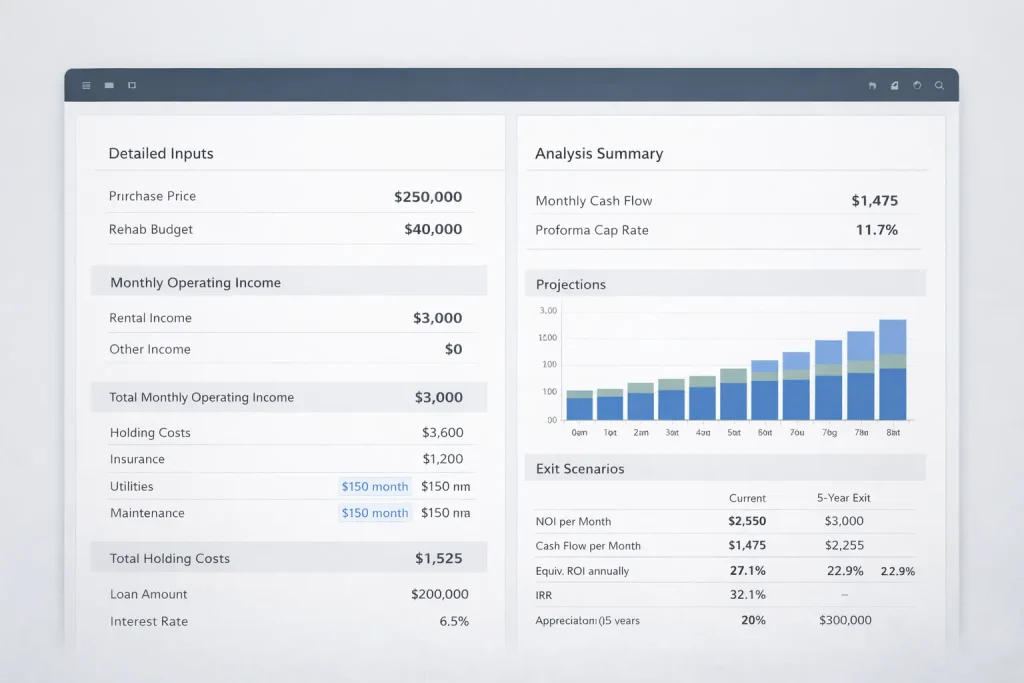
Deal analysis software replaces complex spreadsheets that slowly break as deals get more complicated. Pros pay for this category because one bad assumption can erase years of returns, especially in markets where margins are thinner and holding costs move faster than expected.
At a certain point, the issue is not whether you can build a spreadsheet. It is whether you can trust it under pressure, reuse it across dozens of deals, and adjust assumptions quickly without introducing silent errors. The tools below show up repeatedly among experienced investors because they solve that exact problem in different ways.
DealCheck for Fast, Practical Screening
DealCheck is popular with buy and hold and BRRRR investors who need speed without sacrificing clarity. The core strength is clean cash flow modeling that does not require constant tweaking or rebuilding. Inputs are straightforward, outputs are easy to interpret, and assumptions are visible instead of buried.
Scenario adjustments are simple, which matters when you are stress testing rent, expenses, or financing terms. That makes it useful when you are looking at multiple properties in a short window and need quick comparisons that still reflect reality.
Another reason pros use DealCheck is mobile usability. Being able to analyze deals on the go without exporting files or reformatting spreadsheets keeps momentum high. It is fast screening without overengineering, which is often exactly what experienced investors want early in the process.
PropertyMetrics for Deep, High Volume Underwriting
PropertyMetrics sits on the other end of the spectrum. This is software designed for investors who want extremely detailed underwriting and are comfortable engaging with more complexity.
It handles layered assumptions well, including nuanced financing, operating expenses, and long term projections. That makes it a strong fit for high volume investors or anyone managing larger or more complex assets where small changes compound over time.
Pros use PropertyMetrics because it delivers institutional grade analysis without having to maintain massive spreadsheets. The structure forces discipline and consistency, which becomes more valuable as deal volume increases and memory becomes unreliable.
Market Data and Comps Software Pros Pay For

Market data software replaces guessing based on list prices and surface level trends. Pros pay for this category because bad comps lead to bad offers, and bad offers waste time, credibility, and sometimes deals that should have worked with better inputs.
List prices tell you what a seller wants. Comps and market data tell you what buyers actually pay and what renters actually support. That difference matters more in tight or shifting markets where assumptions break quickly. The tools below are used by experienced investors to ground deal analysis in reality before numbers ever hit a calculator.
PropStream for Fast Market Context
PropStream is widely used because it combines multiple data points into one place. Ownership details, comparable sales, rent estimates, and property history are accessible without bouncing between platforms. That speed matters when evaluating multiple opportunities at once.
Investors often pair PropStream with off market strategies because it surfaces information that helps identify motivation and pricing context early. Knowing who owns a property, how long they have held it, and what similar homes are doing nearby sharpens offer strategy before negotiations begin.
Pros use PropStream because it provides fast market context without friction. It does not replace underwriting, but it makes sure underwriting starts with better inputs.
Mashvisor for Short Term Rental Assumptions
Mashvisor is popular among short term rental investors because it focuses heavily on Airbnb style performance. Market level analytics and short term rental projections help investors avoid relying on overly optimistic nightly rate assumptions.
Short term rentals tend to break faster than long term rentals when data is wrong. Occupancy shifts, regulation changes, and local saturation can erode returns quickly. Market specific analytics make those risks easier to spot early.
Pros use Mashvisor because short term rental assumptions do not age well without real data behind them. It adds context where generic rent estimates fall short.
Zillow Used Carefully for Speed
Zillow still gets checked by experienced investors, but it is never treated as a final authority. List prices and rough rent estimates provide speed, not certainty.
Zillow is useful for quick scans and directional insight, especially when filtering large areas. The problem is that its data is not underwriting grade and can lag or misrepresent actual market conditions.
Pros still check Zillow because speed matters early. They just know where its usefulness ends and where deeper data needs to take over.
Property and Portfolio Management Software
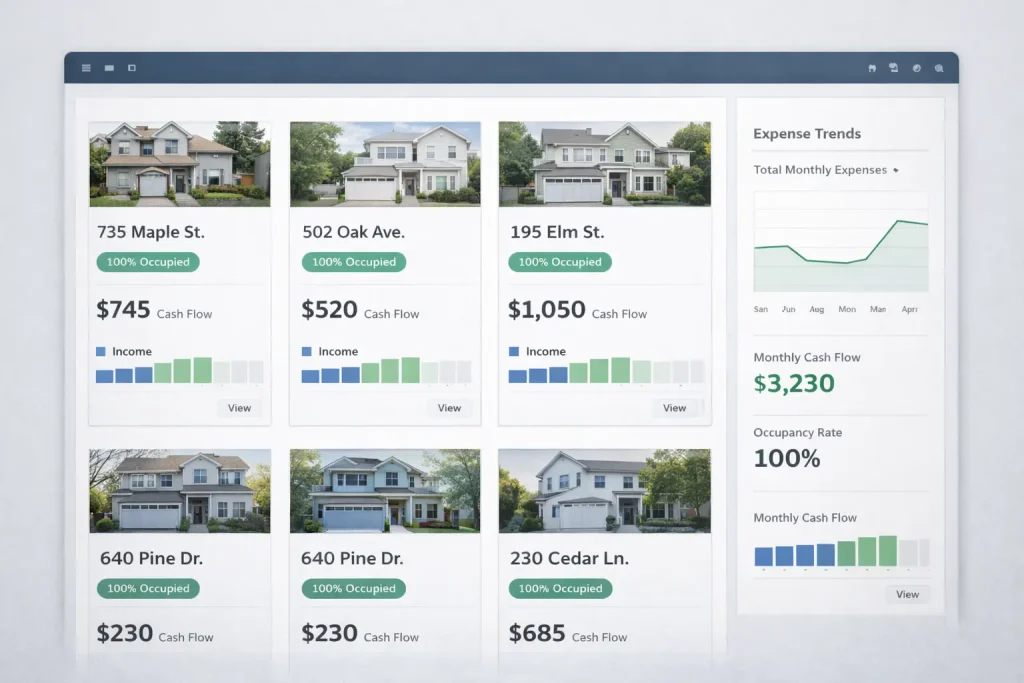
Property and portfolio management software replaces memory, notebooks, and operational chaos. Pros pay for this category because clean cash flow visibility and tax readiness stop being optional once you own more than a couple of properties.
Early on, it is easy to remember who paid rent, which expenses hit last month, and what still needs attention. That breaks down quickly as units grow. Missed payments get overlooked. Expenses get miscategorized. Year end reporting turns into a scramble. Software introduces structure where mental tracking quietly fails.
The goal here is not convenience. It is control. When you can see income, expenses, and performance clearly across properties, decisions get easier and surprises get smaller.
Buildium for Small to Mid Sized Portfolios
Buildium is a common choice for investors managing small to mid sized portfolios who want clarity without excessive complexity. Rent collection, expense tracking, and reporting are centralized in a way that reduces friction for both owners and tenants.
The owner dashboards make it easy to understand how properties are actually performing, not just how they feel. That visibility matters when assessing cash flow trends or preparing for tax season. Clean reporting also reduces back and forth with accountants and property managers.
Pros use Buildium because it creates operational clarity as portfolios grow. It replaces scattered systems with one source of truth.
AppFolio for Larger and More Complex Operations
AppFolio is more robust and leans toward enterprise level operations. Automation is a major strength, particularly for rent collection, maintenance workflows, and reporting at scale.
The reporting tools are deeper and better suited for investors managing larger portfolios or working with professional management teams. As unit count increases, manual processes turn into risk. Automation reduces that exposure.
Pros use AppFolio because it scales beyond a handful of units. When volume increases, systems matter more than effort, and this software is built with that reality in mind.
CRM and Lead Tracking Software for Off Market Investors
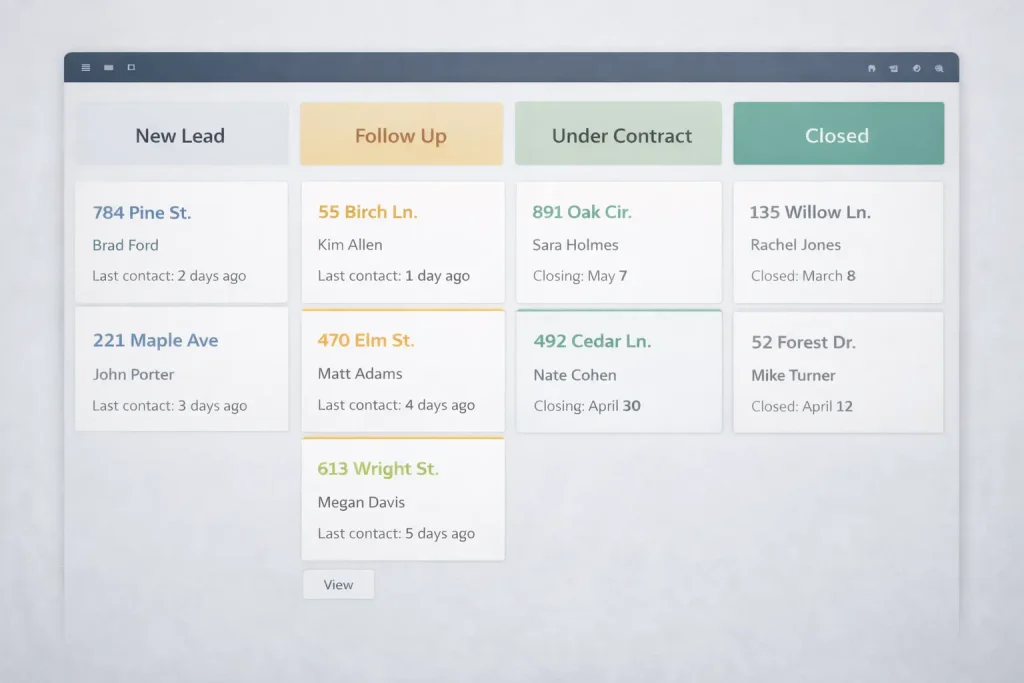
CRM and lead tracking software replaces lost leads and inconsistent follow up. Pros pay for this category because deals are rarely made on first contact. They are made through persistence, timing, and systems that make sure nothing slips through the cracks.
Off market investing is not about finding more leads. It is about managing the leads you already have better than everyone else. Without structure, follow up becomes random. Conversations get forgotten. Opportunities die quietly because no one circled back at the right moment.
This is where CRM software earns its value. It turns follow up into a process instead of a memory test.
Podio for Maximum Flexibility
Podio is widely used among wholesalers and off market investors because it can be customized to almost any workflow. Pipelines, stages, automation, and fields can all be tailored to how you operate rather than forcing you into a preset structure.
That flexibility is both its strength and its weakness. Podio works best for investors who already understand their process and want software to mirror it. Setup takes time, but once dialed in, it can handle complex lead flows and long follow up cycles.
Pros use Podio because they value flexibility over polish. When your business model is unique or evolving, rigid software becomes a constraint instead of a tool.
REsimpli for Speed and Built In Structure
REsimpli is built specifically for real estate investors and focuses on speed and clarity. Lead tracking, follow up reminders, and deal stages are ready out of the box, which reduces setup friction significantly.
This makes it appealing for investors who want structure without spending weeks configuring a system. The workflows reflect common investing processes, so it is easier to get up and running quickly while still maintaining consistency.
Pros use REsimpli because it balances speed and structure. It supports disciplined follow up without requiring heavy customization, which is often exactly what growing investors need.
Accounting and Tax Software Investors Rely On
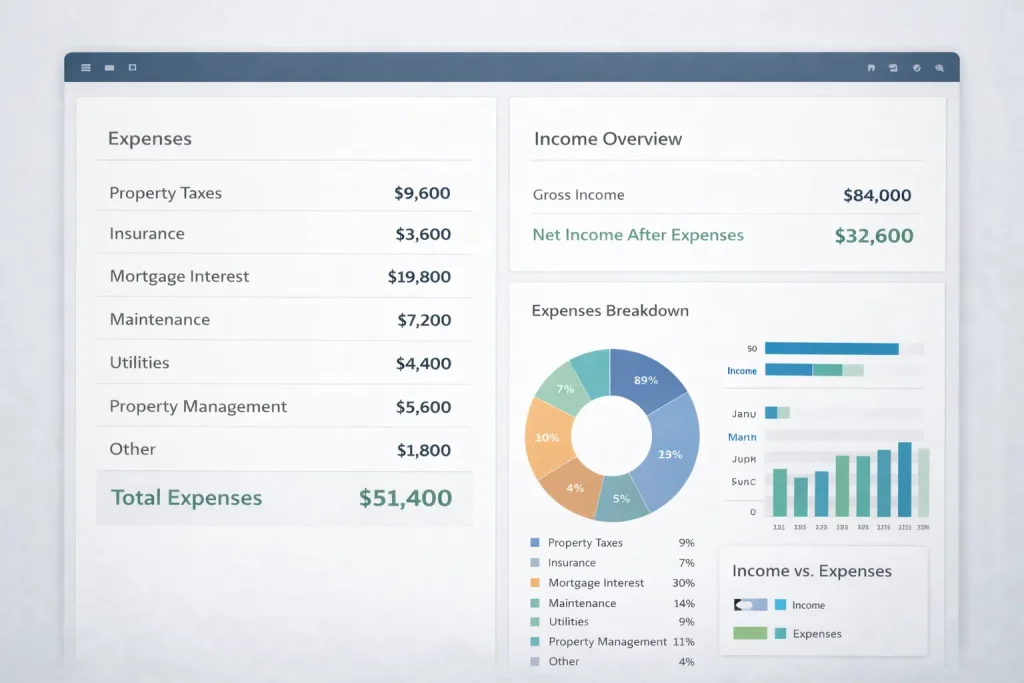
Accounting and tax software replaces year end stress. Pros pay for this category because after tax returns matter more than gross returns, and sloppy books quietly destroy both clarity and confidence.
Early on, it is easy to treat accounting as something you will clean up later. That approach works until it does not. Expenses pile up. Categories blur together. Tax time turns into a guessing game. Fixing it retroactively is far more painful than setting it up correctly from the start.
Experienced investors understand that clean books are not about perfection. They are about visibility. When you can see where money is actually going, decisions get sharper and surprises get smaller.
QuickBooks as the Long Term Standard
QuickBooks is the industry standard for a reason. It is widely accepted, CPA friendly, and built to scale as complexity increases. Most accountants expect it, which alone saves time and friction down the road.
For investors planning to grow, QuickBooks provides structure that holds up over time. Income, expenses, and reports stay organized as transactions multiply. That consistency becomes critical when filing taxes, refinancing, or selling assets.
Pros use QuickBooks because no one wants to rebuild books later. Starting with a scalable system avoids expensive cleanup work when stakes are higher.
Stessa for Simplicity and Visibility
Stessa is designed specifically for rental property owners who want clarity without accounting overwhelm. Income and expenses can be tracked automatically, which reduces manual entry and missed transactions.
The dashboards are simple and focused on what matters most to landlords. Cash flow trends, property level performance, and portfolio snapshots are easy to understand at a glance. That makes it useful for investors who want visibility without living inside accounting software.
Pros use Stessa because it delivers insight without friction. It keeps books clean enough to make decisions confidently while avoiding unnecessary complexity.
What Pros Do Not Pay For and Why
Experienced investors are just as selective about what they avoid as what they adopt. This matters because the wrong software can create a false sense of confidence, which is often more dangerous than having no tool at all.
One category pros tend to avoid is so called all in one platforms that promise to do everything. These tools often hide assumptions behind polished dashboards and simplified outputs. When you cannot see how numbers are calculated, you cannot challenge them. That lack of transparency makes it harder to spot risk before it shows up in real dollars.
Pros also avoid software that replaces thinking instead of supporting it. Any tool that tells you a deal works without showing why encourages passive decision making. Good software forces you to engage with assumptions and understand tradeoffs. Bad software encourages blind trust.
Another red flag is platforms that do not align with an investor’s strategy. A tool built for short term rentals is a poor fit for long term buy and hold analysis. A flipping platform may add unnecessary complexity for rental investors. Mismatch creates friction and increases the chance of bad decisions.
The key insight is simple. Pros outsource friction, not judgment. They use software to reduce manual work and surface risk, not to offload responsibility for decisions.
Spreadsheets vs Paid Software The Real Tradeoff
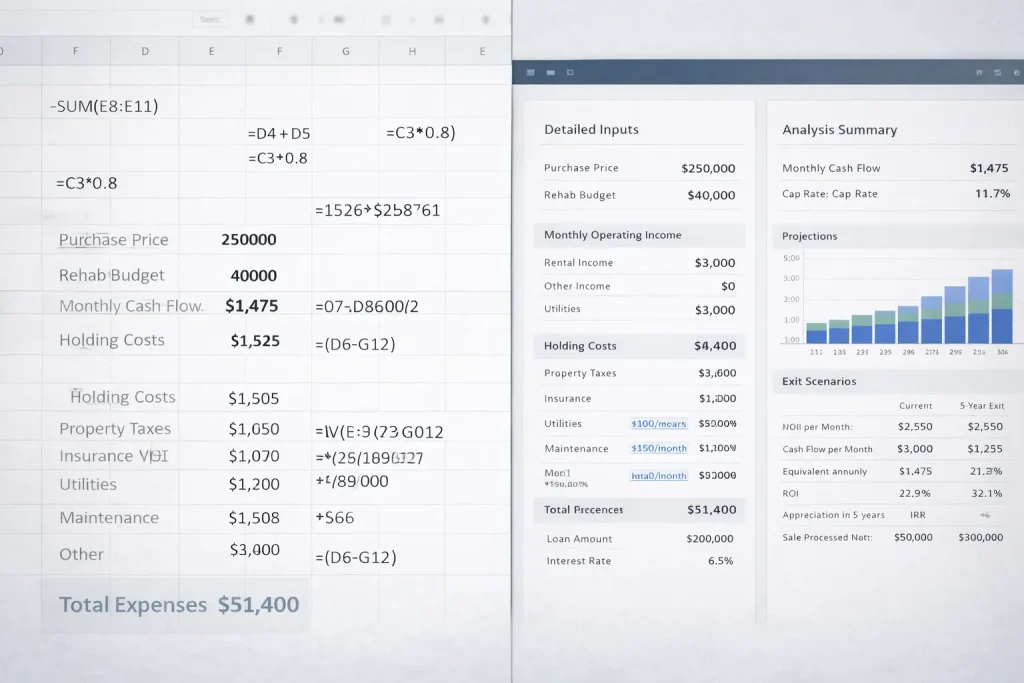
Spreadsheets are not bad. They are familiar, flexible, and cheap. That is exactly why almost every investor starts with them. The problem is not that spreadsheets fail immediately. The problem is that they fail quietly as complexity increases.
Speed is the first tradeoff. Spreadsheets are slow once you analyze deals regularly. Every new property requires copying files, updating formulas, and double checking inputs. Paid software is faster because the structure already exists. You spend time evaluating deals instead of rebuilding the same framework over and over.
Error risk is the next issue. Spreadsheets rely heavily on manual input and fragile formulas. One broken cell can cascade through an entire model without being obvious. Paid software reduces that risk by standardizing calculations and surfacing inconsistencies sooner. Fewer silent errors means fewer false positives.
Stress testing is where spreadsheets really start to struggle. Modeling downside scenarios manually takes time and discipline, so it often gets skipped. Paid software builds this in. Adjusting rent, rates, or timelines becomes part of the process instead of an afterthought. That changes how deals are evaluated.
Scaling exposes the biggest difference. Managing one property with a spreadsheet is manageable. Managing five becomes annoying. Managing ten becomes painful. Paid software is designed to scale with volume, while spreadsheets demand more effort as complexity grows.
Confidence is the final outcome. Spreadsheet confidence tends to be fragile because it depends on memory and trust in your own setup. Software confidence is stronger because the process is repeatable and assumptions are visible.
The truth is simple. Spreadsheets work until they do not. The moment your time, capital, or risk exposure increases, their limitations show up fast.
| Factor | Spreadsheets | Paid Software |
| Speed | ❌ Slow | ✅ Fast |
| Error Risk | ❌ High | ✅ Lower |
| Stress Testing | ❌ Manual | ✅ Built-in |
| Scaling | ❌ Painful | ✅ Designed for it |
| Confidence | ❌ Fragile | ✅ Strong |
How Pros Decide When Software Is Worth Paying For
Pros do not decide to pay for software because they feel ready or because everyone else is using it. The decision usually comes from a very practical realization. At some point, the cost of being wrong becomes more expensive than the tool meant to prevent it.
The simplest rule of thumb is this. If one mistake costs more than the annual subscription, the software is cheap. That framing cuts through emotion quickly. It shifts the question from monthly price to downside protection, which is how experienced investors actually think.
This decision rarely happens in advance. It usually shows up after a specific trigger moment that makes the risk tangible.
The first common trigger is a rehab deal. Renovations introduce variables that spreadsheets tend to underestimate. Timelines slip, change orders appear, and holding costs quietly stack up. That is often when investors realize their assumptions were too optimistic and not stress tested.
Another trigger is the first delayed flip. Profit does not disappear all at once. It decays week by week as interest, utilities, insurance, and opportunity cost pile on. Seeing how fast a delay eats returns forces a different level of scrutiny going forward.
A third trigger is building a multi property portfolio. What worked when everything lived in one file starts to break when properties multiply. Tracking performance, expenses, and assumptions manually becomes unreliable. At that point, software stops feeling optional and starts feeling defensive.
The final trigger is a surprise cash flow issue. Taxes jump. Insurance spikes. A vacancy lasts longer than expected. These moments expose how thin margins can be when downside was not modeled clearly.
Pros do not upgrade tools because they are chasing efficiency. They do it because experience teaches them where mistakes tend to hide.
The Pro Stack by Strategy
There is no single best real estate investing software stack. What works depends entirely on how you make money and where risk shows up in your strategy. Pros build stacks that solve their specific problems instead of chasing tools that promise to do everything.
This section is meant to be skimmable. Think of it as a framework for matching software to how you actually invest.
Buy and Hold Investors
Buy and hold investors prioritize stability, long term cash flow, and operational clarity. The core of the stack starts with deal analysis software that models realistic expenses and conservative rent assumptions. That is followed by a market data platform to ground offers in real comps rather than list prices.
A property management system rounds out the stack. Once units are occupied, clean rent collection and expense tracking matter more than fancy projections. The goal is predictable performance over time, not constant optimization.
The takeaway here is consistency. Buy and hold strategies benefit most from tools that reduce surprises.
BRRRR Investors
BRRRR investors face more moving parts and tighter margins. Rehab and holding cost modeling becomes critical because timelines directly affect returns. Software that shows how delays impact cash flow helps prevent overleveraging early in the process.
Refinance sensitivity tools also matter. Small changes in appraisal value or rates can alter outcomes significantly. Portfolio tracking ties it all together once properties stabilize and capital gets recycled.
For BRRRR strategies, visibility is everything. If you cannot see where risk concentrates, it tends to show up late.
Fix and Flip Investors
Fix and flip investors live and die by timelines. Timeline based analysis software and profit decay visualization are core tools, not nice to have features. Seeing how holding costs erode profit changes how aggressively timelines are managed.
Cost tracking is equally important. Rehab overruns rarely happen all at once. They creep in through small decisions that add up. Software helps surface that drift early.
The main takeaway is urgency. Flips reward speed and punish delays.
Scaling and Hybrid Investors
Scaling or hybrid investors operate across multiple strategies, which increases complexity fast. CRM systems help manage leads, follow up, and deal flow without relying on memory. Accounting automation keeps books clean as transactions multiply.
Portfolio dashboards provide a high level view of performance across properties and strategies. That visibility supports better capital allocation and fewer reactive decisions.
At this stage, software is less about efficiency and more about control. Systems protect the business as it grows.
Software Is Leverage, Not a Shortcut

Real estate investing software does not make you a better investor by itself. It does not replace judgment, experience, or discipline. What it does is amplify whatever process you already have in place.
Pros do not pay for tools to feel smart or to outsource responsibility. They pay because leverage matters when capital is on the line. The right software reduces risk by forcing assumptions into the open instead of letting them hide inside optimism. It saves time by removing repetitive work that adds no strategic value. It protects capital by surfacing problems early, when they are still cheap to fix.
That distinction matters. Software is not a shortcut to better deals. It is a way to see deals more clearly and move faster with confidence once a decision is made.
When used correctly, software does not change what you decide. It changes how quickly and consistently you can decide. That is the real advantage, and why experienced investors treat the right tools as leverage rather than luxury.


