
The Hidden Cost That Trips Up New Homeowners
You finally got pre approved for a mortgage and you are feeling good until your lender drops the term mortgage insurance.
If you are like most first time buyers your first thought is probably something like “Wait… I already have homeowners insurance, why do I need this too.”
That is where it gets tricky. There are actually two types of mortgage insurance and they are not the same thing. MIP and PMI get mixed up all the time because they sound similar, but they apply to completely different loan programs.
MIP, also known as Mortgage Insurance Premium, is tied to FHA loans. PMI, or Private Mortgage Insurance, applies to conventional loans. Both exist to protect the lender, not you, but they affect your cost and how long you will pay them in different ways.
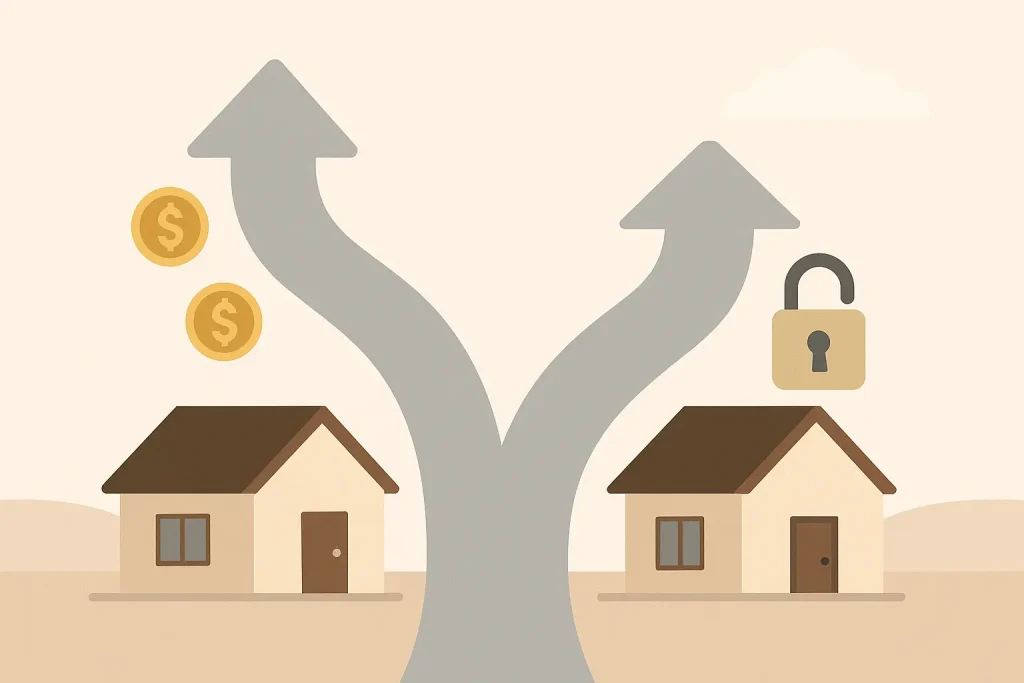
Here is the short version. One you can remove once you build enough equity. The other might stick around for the life of the loan.
If you are thinking about buying a home or already paying mortgage insurance and wondering if it will ever go away, keep reading. By the end you will understand exactly what separates MIP vs PMI, which one costs more, and how to get rid of it faster.
If you want a bigger picture breakdown of how mortgage insurance works and how to remove it sooner, you can read my main guide.
For reference, you can read the FHA’s official page on Mortgage Insurance Premiums to see how the government sets those rates.
The Simple Definition You Won’t Find in Lender Fine Print
When you are getting a home loan, the lender will throw around a lot of terms that sound similar but have very different meanings. MIP and PMI are one of the most confusing pairs because they both relate to mortgage insurance but apply to two totally different types of loans.
Let’s break it down in plain language.
What Is MIP
MIP stands for Mortgage Insurance Premium. It is required for all FHA loans no matter how much you put down. Even if you have great credit or a large down payment, you are still paying MIP.
It comes in two parts. The first is an upfront fee called the UFMIP, which equals 1.75 percent of the total loan amount. Most people roll this into their mortgage so they do not have to pay it all at once.
The second part is an annual fee that gets divided into monthly payments. You will see it listed on your mortgage statement every month along with your principal, interest, and property taxes.
This money does not protect you. It protects the lender in case you default on the loan. The Federal Housing Administration backs FHA loans, and the MIP ensures that the lender gets reimbursed if you stop making payments.
What Is PMI
PMI stands for Private Mortgage Insurance. It applies only to conventional loans when the buyer puts down less than 20 percent.
Unlike MIP, PMI usually does not have an upfront fee. It is charged monthly and added to your mortgage payment. The cost depends on your credit score, loan type, and down payment size.
The good news is that PMI does not have to last forever. Once you build at least 20 percent equity in your home, you can request to have it removed. At 22 percent, it usually falls off automatically based on federal rules explained by the Consumer Financial Protection Bureau.
Both forms of insurance serve the same purpose, but the timelines and costs are what make MIP vs PMI completely different experiences for homeowners.
MIP vs PMI at a Glance
When you compare MIP vs PMI side by side, you start to see how different they really are. Both are forms of mortgage insurance, but they follow separate rules, fees, and timelines.
Here is a quick look at how they stack up.
| Feature | MIP (FHA Loans) | PMI (Conventional Loans) |
| Who it applies to | FHA borrowers | Conventional borrowers |
| Upfront fee | 1.75 percent of the loan | Usually none |
| Ongoing cost | 0.15 to 0.75 percent per year | 0.3 to 1.5 percent per year |
| Can it be removed | Only by refinancing or after 11 years if you put 10 percent or more down | Automatically at 78 percent loan to value or by request at 80 percent |
| Typical borrower | Lower credit and smaller down payment | Higher credit and larger down payment |
| Long term cost | Often higher | Often lower if equity builds fast |

In simple terms, MIP is the cost of getting an FHA loan with a smaller down payment, while PMI is the cost of getting a conventional loan without 20 percent down.
If you are weighing both options, it helps to think about how long you plan to keep the loan. FHA loans with MIP can make sense when you are just starting out or rebuilding credit, but conventional loans with PMI usually cost less in the long run once your equity grows.
For a deeper look at loan programs, you can visit Fannie Mae’s overview of conventional mortgage requirements for FHA guidelines.
Which One Costs You More
Let’s look at a real world example to see how MIP vs PMI actually play out over time.
Say you buy a home for 300,000 dollars and you put 5 percent down.
If you go the FHA route, your loan amount will be about 285,000 dollars after the down payment. You will pay an upfront MIP fee of around 1.75 percent, which adds roughly 4,987 dollars to the loan. On top of that, you will pay an annual MIP of about 0.55 percent, which comes out to around 130 dollars a month.
Now compare that to a conventional loan with PMI. With the same down payment and loan amount, your PMI rate might be about 0.5 percent depending on your credit. That equals roughly 119 dollars a month.

So at first glance, they look pretty similar. The real difference shows up over time.
With PMI, once you build 20 percent equity, you can request to have it removed. At 22 percent, it drops off automatically. In most cases that happens in about five to seven years depending on appreciation and extra principal payments.
With MIP, it is a different story. It does not automatically go away unless you put 10 percent or more down at the start, and even then, you have to wait 11 years. For everyone else, it sticks around for the life of the loan.
This is why many people who start with an FHA loan end up refinancing later into a conventional loan once their credit improves or their home value rises. By doing that, they can get rid of MIP entirely and often lower their monthly payment at the same time.
How to Remove Mortgage Insurance Sooner
If you are paying mortgage insurance right now, there is a good chance you have wondered how to get rid of it faster. The answer depends entirely on the type of loan you have.
If You Have PMI
The good news is that PMI eventually goes away. Once your loan balance drops to 78 percent of your home’s original value, it will automatically be removed by your lender under federal law.
You do not have to wait that long if you are proactive. When your balance reaches 80 percent of the original value, you can contact your lender and request to have PMI canceled early. To qualify, you usually need a solid payment history with no late payments in the last year.
If your home value has gone up since you bought it, you can also order a new appraisal to prove you have reached the 80 percent mark sooner. Rising property values or extra principal payments can help you hit that point much faster than waiting for time alone to do it.

If You Have MIP
MIP works differently. It does not drop off automatically, and there are only two ways to get rid of it.
The first is by refinancing your FHA loan into a conventional loan once you have at least 20 percent equity. When your credit score improves or the home value rises, this move can instantly remove MIP from your monthly payment.
The second way is by waiting 11 years, but that only applies if you originally put down 10 percent or more. If your down payment was smaller, MIP stays in place for the life of the loan.
If your credit improves within a few years, refinancing can save you thousands of dollars over the long run. Before making the switch, use the Bankrate refinance calculator to estimate your potential savings.
Choosing the Right Loan Type for You
FHA loans work best for first time buyers or anyone with lower credit. They are easier to qualify for and require smaller down payments, but the MIP can stick around for years.
Conventional loans fit buyers with stronger credit or bigger down payments who want more flexibility later. PMI can be removed once you build enough equity, which makes it cheaper over time.

Sometimes paying a little more upfront to avoid lifelong MIP makes more sense. If you are unsure which route fits your credit and budget, check out the Experian guide on mortgage credit scores for a quick breakdown of loan options.
Quick Recap
- MIP comes with FHA loans and usually lasts much longer.
- PMI applies to conventional loans and can be removed once you reach enough equity.
- The speed at which you eliminate mortgage insurance depends on your equity growth and credit strength.
- Refinancing into a conventional loan can remove MIP entirely and free you from monthly insurance